
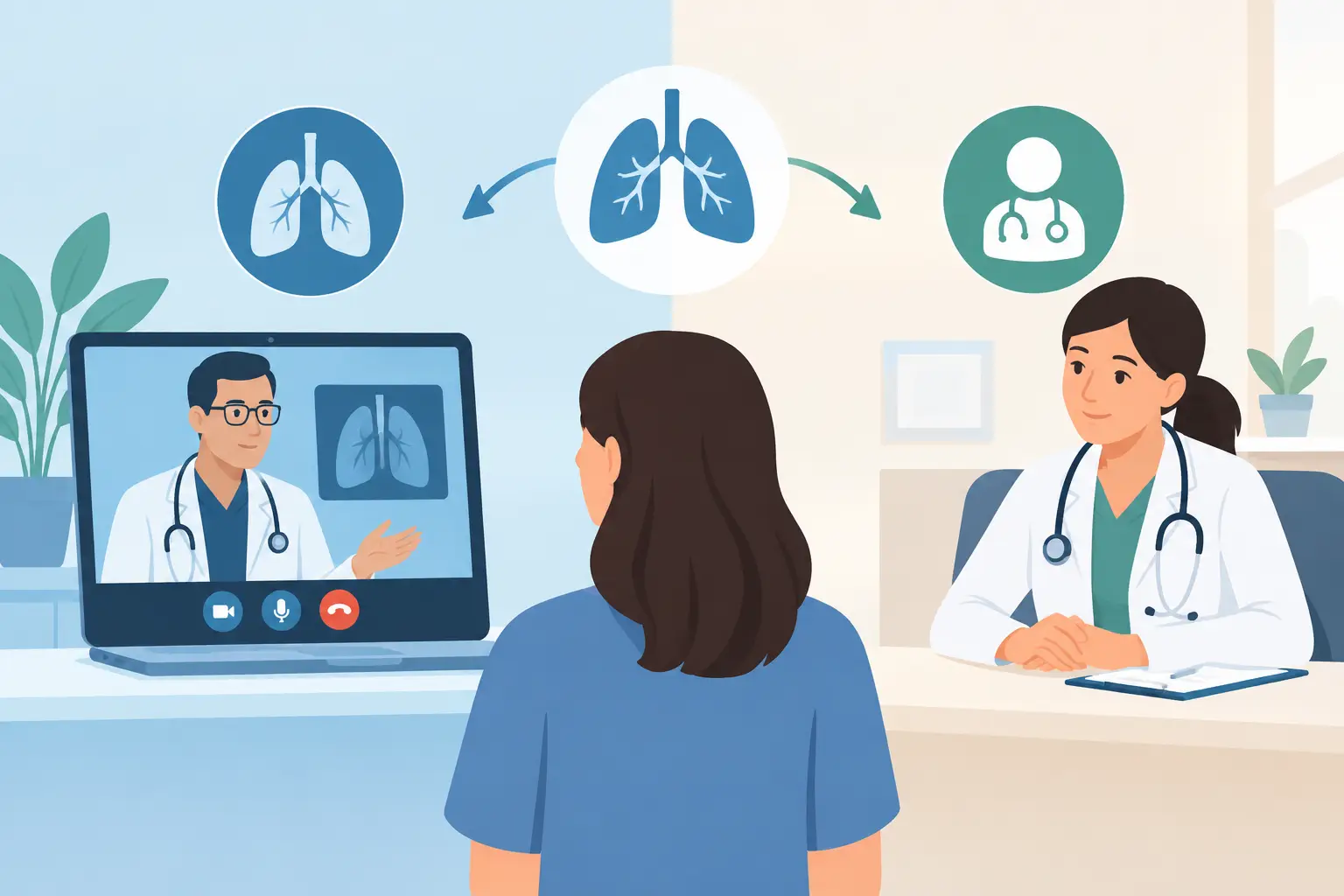
A lingering cough that keeps returning. Shortness of breath on stairs. Wheezing that appears after a cold, then never fully leaves. When breathing symptoms interfere with daily life, deciding between a virtual pulmonologist vs primary care visit can feel like one more thing to sort out. The right choice depends on your symptoms, health history, and whether you need general medical guidance or focused lung and sleep care.
Primary care and pulmonary specialists often work together. You do not always have to choose one or the other. Understanding what each provider can do can help you get the right support sooner, without unnecessary travel or delays.
What Primary Care Can Help With
A primary care provider is usually the first point of contact for many health concerns. They know your overall medical history, manage preventive care, and can evaluate common symptoms such as a new cough, mild wheezing, seasonal allergies, or a respiratory infection.
For many people, primary care can start the initial evaluation. Your provider may review medications, listen to your lungs, order basic testing, prescribe treatment for a straightforward condition, or refer you to a specialist when symptoms need closer attention. They are also well positioned to consider other causes of breathlessness, including heart conditions, anemia, medication side effects, or anxiety.
Primary care may be the right place to begin if your symptoms are new, mild, and improving, or if you need help coordinating several health needs at once. It is also a practical choice for routine checkups, vaccinations, and general medication management.
However, respiratory symptoms are not always simple. If treatment is not working, symptoms are recurring, or you already have a diagnosed lung or sleep condition, specialty care can provide a more focused next step.
Virtual Pulmonologist vs Primary Care for Ongoing Symptoms
A pulmonologist is a physician who specializes in conditions affecting the lungs, airways, and breathing. Many pulmonologists also treat sleep-related breathing disorders, including obstructive sleep apnea. A virtual pulmonologist brings that specialty expertise to a secure video visit, allowing eligible patients to discuss symptoms and treatment from home.
A pulmonology visit may be especially helpful when you have persistent shortness of breath, frequent asthma flare-ups, chronic cough, COPD symptoms, abnormal chest imaging, or trouble staying consistent with a sleep apnea treatment plan. A specialist can review your history in greater detail and build a plan around the specific patterns affecting your breathing.
For example, someone who needs an inhaler refill once a year and has well-controlled asthma may do well with primary care. Someone using a rescue inhaler more often, waking up at night coughing, or needing repeated steroid treatments may benefit from a pulmonologist’s assessment. The same is true for COPD: primary care can manage many needs, while a pulmonary specialist can help refine treatment when symptoms, flare-ups, oxygen needs, or equipment questions become more complex.
The distinction is not about one provider being better than the other. It is about matching the level of care to the problem. Primary care sees the whole picture. A pulmonologist adds deep, condition-specific expertise when breathing or sleep health needs more attention.
When a Virtual Pulmonologist May Be the Better Fit
Virtual specialty care works particularly well for many follow-up and evaluation needs because much of pulmonary care starts with a careful conversation. A board-certified pulmonologist can review your symptoms, medical records, current inhalers or devices, prior test results, and treatment response during a secure video consultation.
A virtual visit may be a strong option if you have already been diagnosed with asthma, COPD, sleep apnea, or another respiratory condition and need ongoing guidance. It can also help when you are seeking a second opinion, need medication continuity, want to discuss side effects, or have difficulty getting to an in-office specialty appointment.
For sleep apnea, virtual care can be especially convenient. Your specialist can discuss snoring, daytime fatigue, CPAP concerns, and adherence challenges, then help guide the next steps. When appropriate, prescriptions can be sent electronically to a local pharmacy, and support for respiratory or sleep equipment can help reduce the hassle of managing care across multiple locations.
There are limits to telemedicine, and a trustworthy practice will be clear about them. Some symptoms require an in-person exam, imaging, pulmonary function testing, sleep testing, or urgent assessment. Your virtual pulmonologist can help determine which services should happen locally and how those results fit into your treatment plan.
Signs You May Need Specialist Care Soon
You do not need to wait until symptoms become severe to ask for pulmonary support. Consider scheduling a pulmonology evaluation if your breathing problems keep coming back, your current treatment is not providing enough relief, or you are unsure whether your diagnosis is correct.
Specialty care may also be useful if you have been to urgent care multiple times for breathing issues, have needed repeated antibiotics or steroids, experience activity limits because of shortness of breath, or feel overwhelmed by several inhalers, devices, and treatment instructions. A personalized plan can make daily management feel more manageable.
If you have loud snoring, witnessed pauses in breathing during sleep, morning headaches, or persistent daytime sleepiness, a sleep-focused pulmonary evaluation may also be appropriate. Sleep apnea can affect more than your energy level, and treatment should be tailored to your symptoms and needs.
Severe or sudden symptoms are different. New chest pain, blue lips or face, severe trouble breathing, confusion, fainting, or symptoms that feel life-threatening require emergency care. Telehealth is not a substitute for calling 911 or seeking immediate in-person help in an emergency.
How to Decide Where to Start
If you are unsure, start with the question: do I need broad medical care, or do I need focused help for a breathing or sleep problem? For a new and uncomplicated concern, primary care is often a sensible first call. For a known respiratory diagnosis, symptoms that persist despite treatment, or a need for specialized medication and equipment guidance, a pulmonologist may save time by addressing the issue directly.
Your insurance requirements can matter, too. Some plans require a referral from primary care before specialty care, while others allow you to schedule directly with an in-network specialist. Checking your coverage before an appointment can help you understand your options.
Convenience is also a valid part of the decision. People with COPD, mobility limitations, fatigue, demanding work schedules, or long drives to the nearest clinic may postpone care because the logistics are difficult. Virtual pulmonary care removes the commute and waiting room while keeping the clinical conversation personal and focused.
Make the Most of Your Virtual Visit
Before a virtual pulmonology appointment, gather your current medications, inhalers, device information, recent test results, and a short record of your symptoms. Note when symptoms occur, what triggers them, how often you use rescue medication, and whether breathing problems affect sleep, work, exercise, or household activities.
Be ready to explain what has changed. Even small details, such as waking up short of breath or avoiding stairs you once used easily, can help a specialist understand the full picture. Your clinician may recommend medication changes, additional testing, a local in-person evaluation, or equipment support based on your individual needs.
At Interstate Pulmonary, patients can complete an intake questionnaire, meet with a board-certified specialist by secure video, and receive a personalized plan designed around their respiratory or sleep health goals. The goal is not simply a convenient appointment. It is clear, ongoing guidance that helps you breathe easier and stay engaged in daily life.
You deserve care that fits the reality of living with a breathing or sleep condition. Whether your next step is primary care, a pulmonologist, or both working together, getting answers early can make tomorrow feel more manageable.