
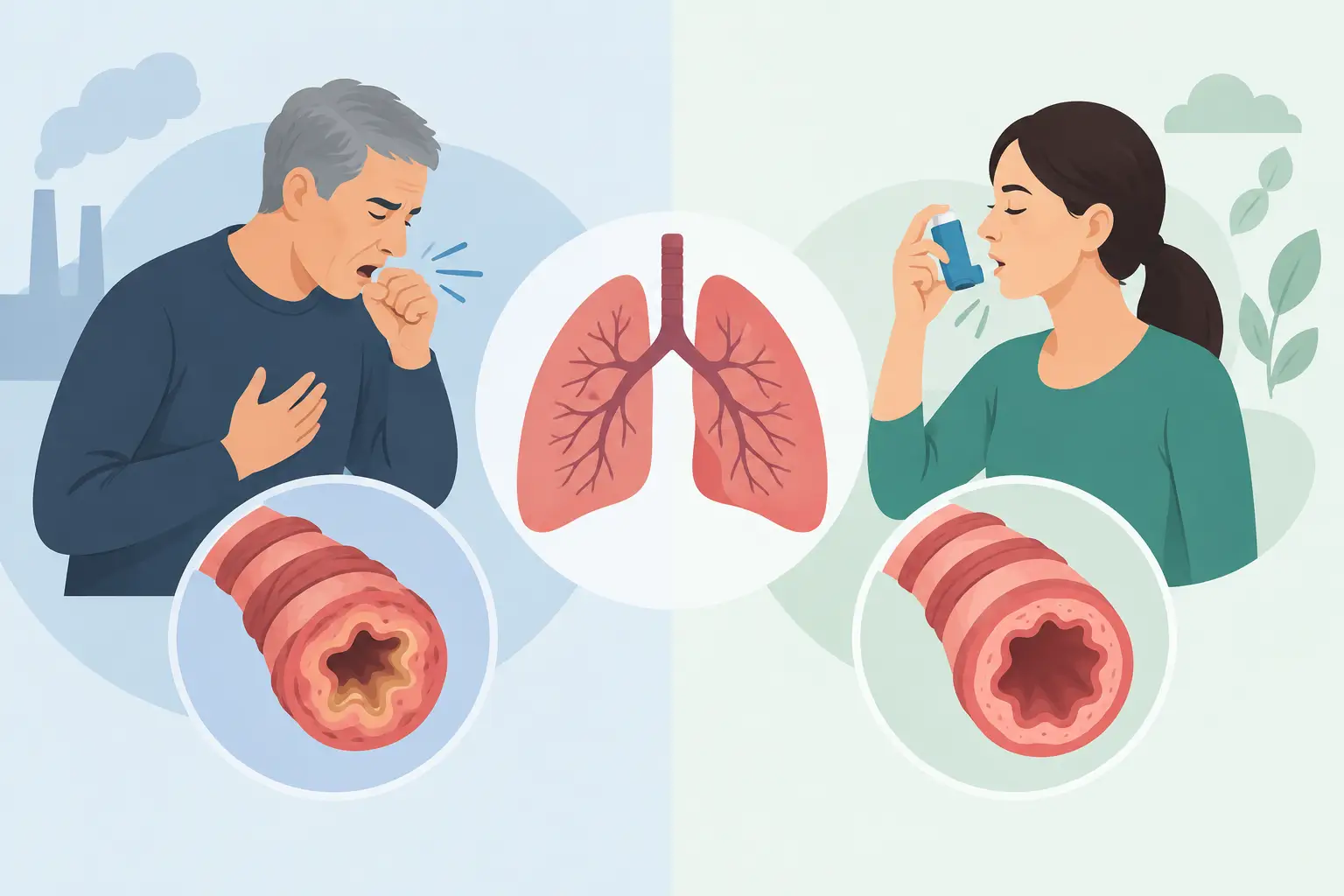
A cough that keeps you up at night, chest tightness on a cold morning, or shortness of breath on a familiar walk can all raise the same question: is this asthma, COPD, or something else? COPD vs asthma symptoms can look similar day to day, but the pattern behind them, the likely triggers, and the treatment approach may be quite different. Getting the distinction right can help you avoid flare-ups and protect your lung health over time.
COPD vs asthma symptoms: what they have in common
Both chronic obstructive pulmonary disease, or COPD, and asthma affect the airways. Both can make it feel harder to move air in and out of your lungs. People with either condition may experience shortness of breath, coughing, wheezing, chest tightness, and reduced exercise tolerance.
That overlap is why symptoms alone cannot confirm a diagnosis. Wheezing, for example, is often associated with asthma, but it can occur with COPD as well. A chronic cough may point toward COPD, yet some people with asthma cough more than they wheeze.
A pulmonologist considers the full picture: when symptoms started, whether they come and go, smoking and environmental exposure history, allergies, medication response, and lung function testing. Some people also have features of both conditions, often called asthma-COPD overlap. This is one reason individualized care matters.
How asthma symptoms usually behave
Asthma is a long-term condition in which the airways become inflamed and overly sensitive. Symptoms are often variable. A person may feel well for days or weeks, then have coughing, wheezing, or breathlessness after exposure to a trigger.
Common asthma triggers include respiratory infections, pollen, pet dander, dust mites, mold, smoke, air pollution, cold air, exercise, and strong scents. For some people, symptoms are most noticeable at night or early in the morning. Others experience symptoms mainly with physical activity.
Asthma often begins in childhood, but it can develop at any age. Adults with new breathing symptoms should not assume they have asthma, even if they notice a clear trigger. Other lung and heart conditions can cause similar concerns.
A key feature of asthma is that airway narrowing is often reversible. Symptoms may improve quickly with a rescue inhaler, and longer-term controller medicines can reduce inflammation and lower the risk of attacks. That does not mean asthma is minor. Poorly controlled asthma can cause serious, even life-threatening flare-ups.
Signs asthma may not be well controlled
Needing a rescue inhaler more often than prescribed, waking at night because of coughing or wheezing, avoiding activities because of breathing problems, or having repeated urgent-care visits can all signal that an asthma plan needs review. Treatment may need to be adjusted, inhaler technique may need correction, or an unrecognized trigger may be playing a role.
How COPD symptoms usually behave
COPD is an umbrella term that commonly includes emphysema and chronic bronchitis. It causes persistent airflow limitation, usually after long-term exposure to lung irritants. Cigarette smoking is a major cause, but secondhand smoke, occupational dust or chemical exposure, air pollution, and certain genetic conditions can also contribute.
COPD is more commonly diagnosed in adults over 40, although age alone does not determine who can develop it. Symptoms often build gradually, which can make them easy to dismiss. A person may begin by taking the stairs more slowly, stopping more often while walking, or attributing a daily cough to getting older.
The most common COPD symptoms are ongoing shortness of breath, especially with activity; a chronic cough; mucus or phlegm production; wheezing; frequent respiratory infections; and fatigue. Unlike asthma, COPD symptoms are typically more persistent rather than appearing only around specific triggers. Inhalers can improve breathing and reduce flare-ups, but airflow limitation is usually not fully reversible.
COPD can also worsen suddenly. These episodes, called exacerbations or flare-ups, may involve more breathlessness than usual, a change in the amount or color of mucus, increased coughing, fever, or a new drop in energy. Early treatment can sometimes prevent a flare-up from becoming an emergency or requiring hospitalization.
The differences that matter most
There is no single symptom that always separates COPD from asthma. Instead, clinicians look for patterns. Asthma tends to be more variable, more connected to triggers, and more likely to improve substantially between episodes. COPD tends to be progressive and persistent, with daily symptoms that may gradually limit activity.
Your personal history adds important context. Allergies, eczema, a family history of asthma, and symptoms that began earlier in life can support an asthma diagnosis. A long history of smoking, workplace exposures, or chronic mucus-producing cough may make COPD more likely.
Still, these are not rules. A nonsmoker can develop COPD, and someone with asthma can smoke or have ongoing symptoms. It is also possible to have asthma and COPD together. Self-diagnosis can delay the treatment that best fits your lungs.
Why testing is more useful than guessing
Spirometry is one of the most useful tests for distinguishing asthma from COPD. During this breathing test, you forcefully exhale into a device that measures how much air you can move and how quickly you can move it. The test may be repeated after you use a bronchodilator medication to see how your airways respond.
A significant improvement after the medication can support asthma, while more fixed airflow limitation can support COPD. Results are interpreted alongside your symptoms and health history, not in isolation. Depending on your situation, a clinician may also recommend chest imaging, oxygen testing, allergy evaluation, or additional lung function testing.
If you have already been told you have asthma or COPD but your symptoms have changed, reassessment is worthwhile. An incorrect inhaler technique, untreated sleep apnea, reflux, sinus disease, anxiety, heart conditions, or repeated exposures can all affect breathing. A diagnosis should guide care, not end the conversation.
When breathing symptoms need urgent care
Do not wait for a routine appointment if breathing becomes severe or rapidly worsens. Seek emergency help for trouble speaking in full sentences, blue or gray lips or fingertips, confusion, fainting, severe chest pain, or a rescue inhaler that is not helping as expected.
You should also contact a clinician promptly for new or worsening shortness of breath, increasing mucus, fever with respiratory symptoms, or a noticeable drop in your ability to manage usual activities. For people with COPD, a flare-up plan can make it easier to know which changes require a same-day call and which require emergency care.
Building a plan that fits your daily life
Whether you have asthma, COPD, or symptoms that have not yet been diagnosed, effective care starts with a clear assessment and a practical plan. That may include the right inhaler, instruction on how to use it, trigger reduction, vaccines, smoking cessation support, pulmonary rehabilitation, activity guidance, and a written plan for worsening symptoms.
Consistency matters. Many controller inhalers are designed for daily use even when you feel well, while rescue medicines are used for quick symptom relief. Stopping or changing medication without medical guidance can increase the chance of symptoms returning or worsening.
For patients who want specialty support without adding a commute, Interstate Pulmonary offers secure video consultations with board-certified pulmonary clinicians. A remote visit can be a convenient way to review symptoms, medications, inhaler use, and next steps, while arranging appropriate testing or equipment support when needed.
Breathing changes deserve attention, even when they develop slowly. A timely conversation with a pulmonary specialist can replace uncertainty with a plan that supports safer activity, fewer disruptions, and more confidence in each breath.