
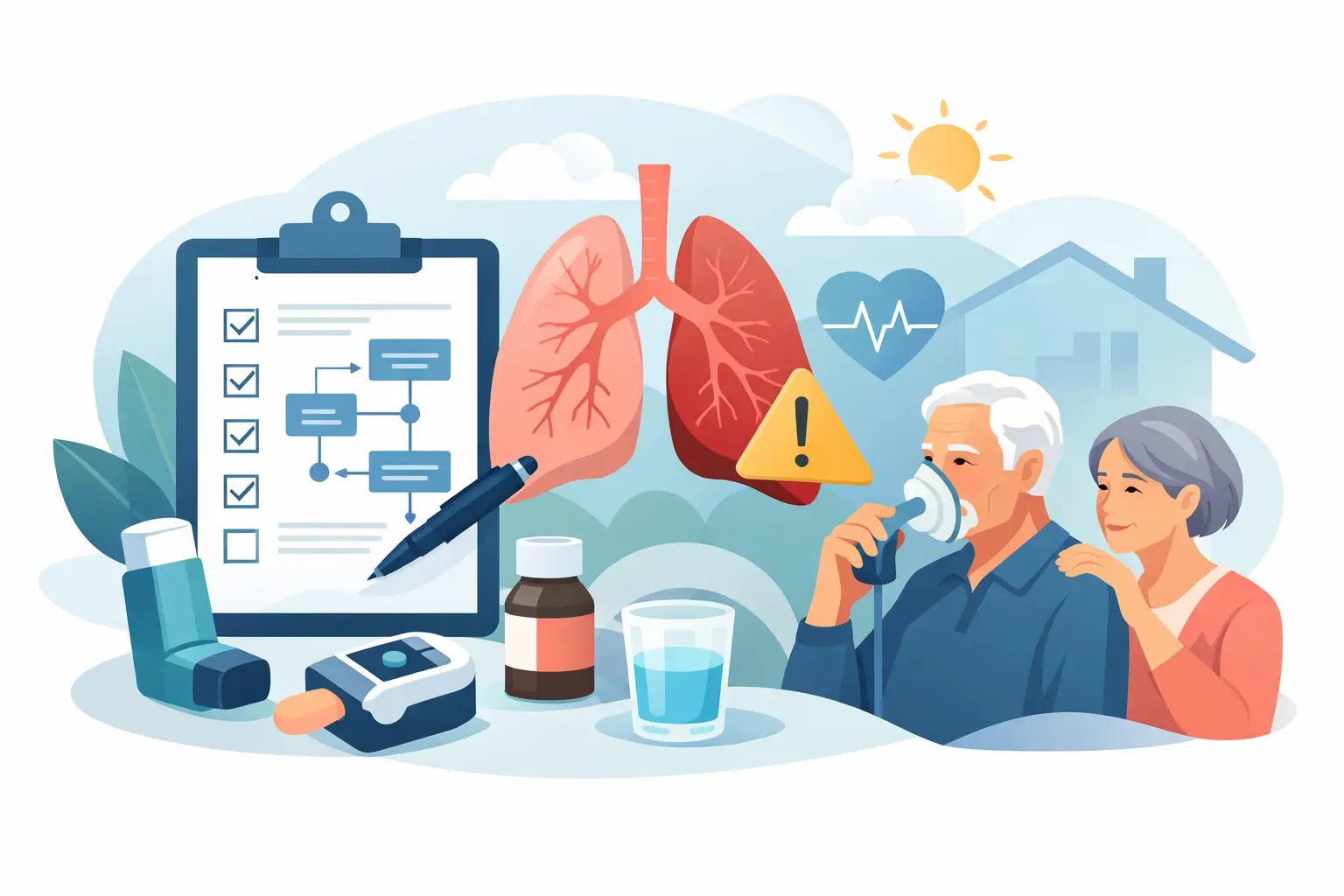
A flare-up can begin quietly. You may notice you are pausing more often while walking to the kitchen, coughing more in the morning, or feeling unusually tired after routine tasks. A guide to COPD action plans helps turn those early changes into clear next steps, so you are not left deciding what to do when breathing feels harder.
A COPD action plan is a written, personalized set of instructions created with your clinician. It explains what your usual breathing looks like, what to do when symptoms start to worsen, and when to get urgent or emergency help. It is not a replacement for medical care. It is a practical tool that helps you follow the care plan already designed for you.
What a COPD Action Plan Does
COPD symptoms can vary from day to day. Weather, respiratory infections, smoke exposure, allergies, activity level, and medication changes can all affect how you feel. Without a plan, it can be difficult to tell whether a rough day is temporary or the beginning of an exacerbation, also called a COPD flare-up.
Your action plan gives you a baseline. It should describe your regular symptoms, medications, oxygen instructions if you use oxygen, and the contact information for your pulmonary care team. It should also spell out the symptoms that mean you need to act quickly.
Many plans use a simple green, yellow, and red zone format. The colors are easy to remember, but the details must be specific to you. Someone who has a daily cough may be in their usual green zone with that symptom, while a new or more frequent cough could move them into the yellow zone.
The Green Zone: Your Usual Breathing Day
The green zone represents your stable, everyday condition. You may still have COPD symptoms, but they are at your normal level and manageable with your usual treatment plan. For example, you may be able to complete your regular activities, sleep without a major change in breathing, and use your prescribed maintenance medications as directed.
This part of the plan should be very specific. Write down what “normal” means for you: your typical cough, mucus amount and color, activity tolerance, and usual need for a rescue inhaler. If you monitor oxygen saturation, include the range your clinician has identified as appropriate for you. A number on a pulse oximeter is useful context, but it does not tell the full story. How you feel and how hard you are working to breathe matter, too.
The green zone is also where prevention happens. Take maintenance medications consistently, use inhalers with the correct technique, avoid known triggers when possible, and keep recommended vaccinations and follow-up appointments on track. If you use home oxygen, follow the prescribed flow rate. Do not increase or decrease oxygen on your own unless your clinician has given you specific instructions to do so.
The Yellow Zone: Signs a Flare-Up May Be Starting
The yellow zone is the part of a COPD action plan that can make the biggest difference. It identifies changes that deserve prompt attention before they become severe. Early action may reduce the chance of an emergency visit or hospitalization, but the right response depends on your prescribed plan and medical history.
Common yellow-zone symptoms include more shortness of breath than usual, increased wheezing or chest tightness, coughing more often, or needing your rescue inhaler more than normal. You may also notice a change in mucus color, thickness, or amount; reduced ability to walk, bathe, or do routine tasks; swelling in your feet or ankles; fever; or unusual fatigue.
Your clinician may instruct you to use a prescribed quick-relief medication differently during this stage, start other medicines you have been given for flare-ups, or contact the office the same day. Follow only the directions written for you. Do not begin leftover antibiotics, steroids, or another person’s medication without medical guidance. These treatments can be helpful in the right situation, but they are not appropriate for every increase in symptoms.
Keep a brief record of when symptoms changed, what you have taken, and whether you are improving. This makes it easier for your pulmonary clinician to assess what is happening during a phone or secure video visit. If your plan says to call when symptoms first change, do not wait until the next day to see whether they pass.
The Red Zone: When You Need Emergency Help
The red zone covers symptoms that may signal a medical emergency. Call 911 or seek emergency care right away if you have severe or rapidly worsening shortness of breath, cannot speak in full sentences because of breathlessness, develop blue or gray lips or fingertips, feel confused, faint, or unusually drowsy, or have severe chest pain.
Other urgent warning signs include a rescue medication that is not helping as expected, a very fast heartbeat accompanied by severe breathing difficulty, or symptoms that worsen quickly despite following your yellow-zone instructions. Do not drive yourself if you are severely short of breath, dizzy, confused, or feel unsafe. Emergency responders can begin care on the way to the hospital.
A COPD action plan should also name the emergency contact who can help you make a call, gather your medication list, or stay with you if symptoms become serious. Keep the plan where it is easy to find, such as on the refrigerator, near your medications, or saved on your phone.
How to Build a COPD Action Plan With Your Clinician
A useful plan is short enough to use when you are tired or anxious, yet detailed enough to guide decisions. Start by bringing an updated list of every prescription, inhaler, over-the-counter medication, vitamin, and oxygen setting to your appointment. Mention recent flare-ups, urgent care visits, hospital stays, medication side effects, and any barriers that make treatment harder to follow.
Your clinician can help you identify your personal warning signs. For some people, mucus changes are the earliest clue. For others, it is waking up short of breath, a drop in exercise tolerance, or using a rescue inhaler more frequently. The goal is not to compare your symptoms with someone else’s COPD. The goal is to recognize a meaningful change from your own baseline.
Ask your clinician to review inhaler technique as well. Even an effective medication may not work as intended if the device is used incorrectly. If cost, refills, transportation, or equipment access have interrupted your care, say so directly. A plan is more likely to work when it fits your daily life.
For many patients, a secure video appointment is a convenient way to review symptoms, medication use, and a written action plan without traveling to an office. Interstate Pulmonary provides remote specialty care with board-certified pulmonary clinicians who can help patients build and update individualized respiratory treatment plans from home.
Keep the Plan Current and Easy to Use
Your COPD action plan should change when your health changes. Review it after a flare-up, hospitalization, new diagnosis, medication adjustment, or change in oxygen needs. If you have not looked at it in a year, bring it to your next pulmonary appointment and ask whether it still reflects your current treatment.
Share the plan with the people who may need to help you. A spouse, adult child, caregiver, or close friend does not need to manage your medical care, but they should know where the plan is and recognize the red-zone signs. Keep your medication list and pharmacy information with it, especially if you travel.
It also helps to prepare before symptoms worsen. Refill medications before they run low, keep your inhalers in a consistent location, and make sure you know how to contact your care team after hours. If you use a nebulizer, oxygen, or other respiratory equipment, know whom to call if equipment stops working or supplies are delayed.
A written plan cannot prevent every flare-up, but it can replace uncertainty with a clear response. When you know your usual symptoms, your personal warning signs, and the point at which to ask for help, you are better positioned to protect your breathing and stay connected to the care you need.