
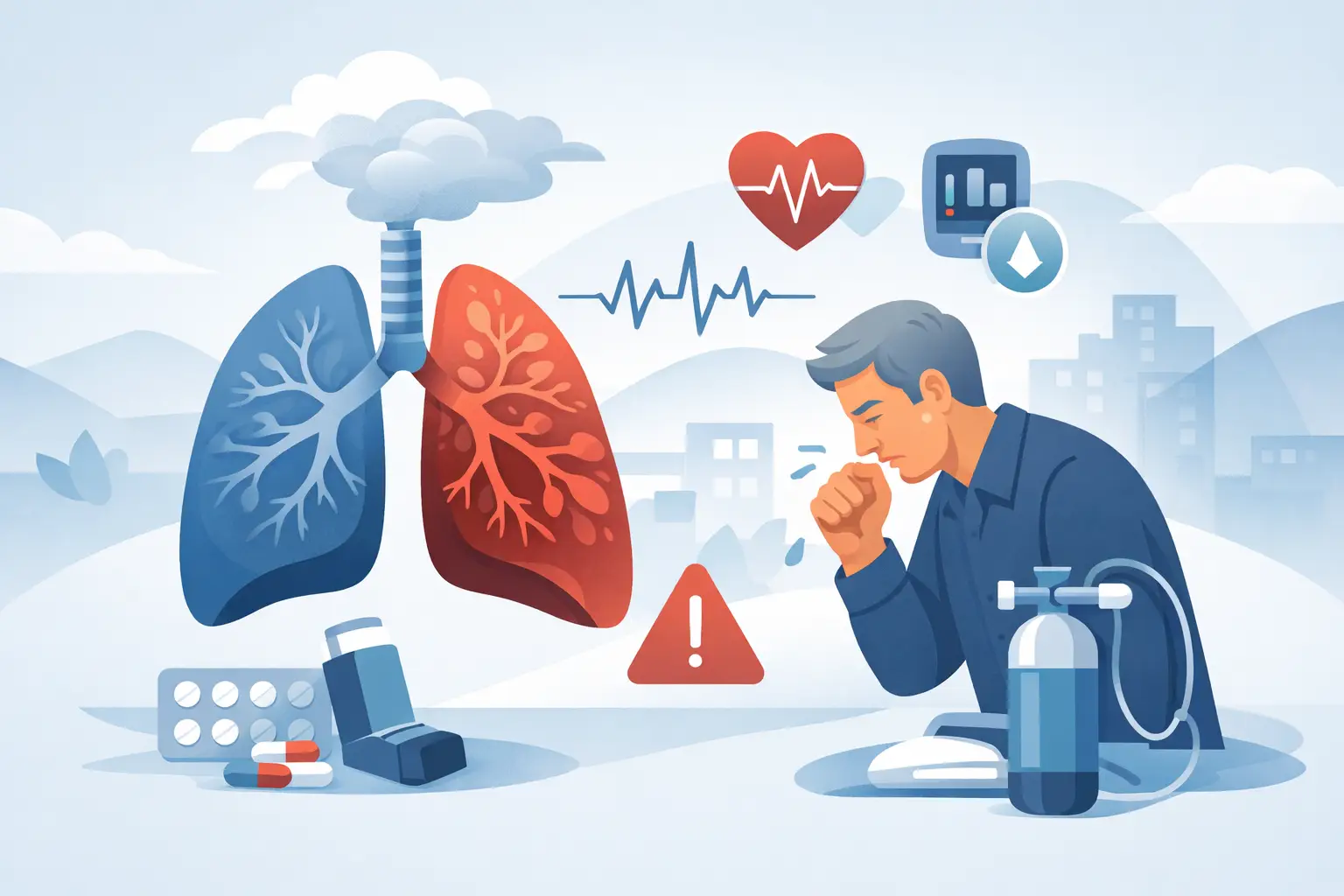
A COPD flare-up does not always begin with a dramatic breathing emergency. It may start with needing more breaks while getting dressed, waking up with a heavier chest, or noticing that your usual inhaler is not providing the same relief. Knowing the top signs of COPD worsening can help you contact your care team earlier, before symptoms disrupt daily life or require emergency treatment.
COPD, or chronic obstructive pulmonary disease, includes conditions such as emphysema and chronic bronchitis. Symptoms can vary from day to day, but a meaningful change from your normal baseline deserves attention. You know what a typical good day and difficult day feel like. When breathing, mucus, energy, or medication needs shift beyond your usual pattern, it is time to take that change seriously.
Top Signs of COPD Worsening
Shortness of breath that is new or more intense
Breathlessness is common with COPD, so the key question is whether it has changed. You may become short of breath during activities you normally manage, such as walking across a room, showering, preparing a meal, or talking in full sentences. Some people notice they need to sleep more upright because lying flat makes breathing feel harder.
If your rescue inhaler is needed more often than prescribed, does not last as long, or gives less relief than usual, call your pulmonologist. A medication review may be needed. Do not increase or change prescription doses on your own unless your clinician has already given you a written action plan with specific instructions.
More coughing or a change in mucus
A cough that becomes more frequent, deeper, or harder to control can signal airway irritation or an infection. Pay attention to mucus, too. More mucus than usual, mucus that is thicker, or a change in color from clear or white to yellow, green, brown, or bloody should be discussed with a clinician.
Not every mucus change means a bacterial infection or requires antibiotics. Allergies, smoke exposure, viral illnesses, and other irritants can all contribute. Still, a prompt assessment helps your care team decide whether you need treatment changes, testing, or closer monitoring.
Wheezing, chest tightness, or noisy breathing
Wheezing can sound like a whistle or squeak when you breathe, while chest tightness may feel like pressure or an inability to take a satisfying breath. Either can happen when airways become more inflamed or narrowed. These symptoms are especially concerning when they are new, more frequent, or occurring at rest.
Noisy breathing can also have causes beyond COPD, including asthma, infection, heart conditions, or upper-airway problems. That is why it is useful to describe exactly when it occurs, what seems to trigger it, and whether your prescribed inhalers help.
Lower energy and less ability to do everyday tasks
COPD worsening is not only about the lungs. When breathing takes more effort, the body uses more energy. You may feel unusually tired, need more rest between activities, skip routines you usually enjoy, or find that simple tasks leave you exhausted.
This gradual loss of stamina can be easy to dismiss as aging, poor sleep, or a busy week. But when it appears alongside more coughing or shortness of breath, it may be an early warning that your COPD is less controlled. A specialist can help identify whether an exacerbation, sleep issue, medication concern, or another health condition may be contributing.
Swelling, sudden weight changes, or new confusion
Swelling in the feet, ankles, or legs, rapid weight gain, and increasing fatigue can sometimes reflect strain on the heart or fluid retention. New morning headaches, daytime sleepiness, confusion, or difficulty staying alert may be signs that oxygen or carbon dioxide levels need medical evaluation.
These symptoms are not always caused by COPD, but they should not be ignored. COPD often exists alongside other conditions, and a change in your overall health may require more than an inhaler adjustment.
When COPD Symptoms Need Emergency Care
Some symptoms require immediate help rather than a routine or next-day appointment. Call 911 or seek emergency care if you have severe trouble breathing, cannot speak in full sentences because of breathlessness, develop blue or gray lips or fingernails, faint, become suddenly confused, or experience severe chest pain.
Also seek urgent evaluation if your prescribed rescue medicine is not helping and your breathing is getting worse. Do not try to drive yourself if you are severely short of breath, dizzy, or confused. Emergency teams can assess oxygen levels, heart rhythm, infection, and other possible causes while providing treatment quickly.
If symptoms are uncomfortable but stable, contact your pulmonary care team as soon as possible. The right next step depends on your normal condition, medical history, home oxygen use, current medications, and whether you have a COPD action plan.
What to Do When You Notice a Change
Early communication gives your clinician more options. Before your appointment, write down when symptoms started and whether they are getting better, worse, or staying the same. Be ready to share how often you are using your rescue inhaler, any mucus changes, recent illness exposure, fever, medication refills, and oxygen readings if your clinician has instructed you to monitor them.
A simple action plan can make a stressful moment more manageable. Your plan may include these practical steps:
- Use medications exactly as prescribed, including maintenance inhalers that help prevent symptoms.
- Avoid smoke, vaping, strong fragrances, dust, and other triggers that make breathing worse.
- Rest, stay hydrated if your medical team has not restricted fluids, and pace activities while symptoms are active.
- Contact your clinician promptly when your symptoms move beyond your normal baseline.
If you use inhalers, technique matters. Even an effective medication may not work as expected if the device is not being used correctly. During a video visit, a clinician can often review your inhaler technique, confirm whether your treatment plan still fits your symptoms, and help address prescription or equipment needs without requiring a commute.
Why COPD Flare-Ups Happen
Many COPD exacerbations are triggered by respiratory viruses, bacterial infections, air pollution, wildfire smoke, cold air, or exposure to tobacco smoke. Missed maintenance medication doses and incorrect inhaler use can also contribute. Sometimes there is no obvious trigger.
The goal is not to blame yourself for every flare-up. COPD is a chronic condition, and symptoms can change even when you are doing your best. The practical goal is to recognize changes early, reduce preventable triggers where possible, and have a reliable way to reach specialty care.
Vaccination, smoking cessation support, pulmonary rehabilitation, physical activity that matches your abilities, and regular medication reviews can all lower risk for many people. The best approach is individualized. For example, exercise can support endurance, but a person recovering from a flare-up may need different guidance than someone whose symptoms have been stable for months.
Getting Pulmonary Support From Home
A worsening symptom should not automatically mean a long drive, a crowded waiting room, or delaying care because getting there feels difficult. For many non-emergency concerns, a secure video consultation can help you speak with a board-certified pulmonary clinician from home, review symptoms and medications, and receive a clear next-step plan.
Interstate Pulmonary provides remote specialty support designed around that process, including individualized treatment guidance, electronic prescriptions sent to local pharmacies, and help obtaining appropriate respiratory equipment. Telemedicine is not a replacement for emergency care, but it can make follow-up and ongoing COPD management more accessible when timing matters.
If your breathing feels different from your normal baseline, trust that observation. Reaching out early can bring reassurance, prevent a small change from becoming a larger setback, and help you return to the activities that matter to you.