
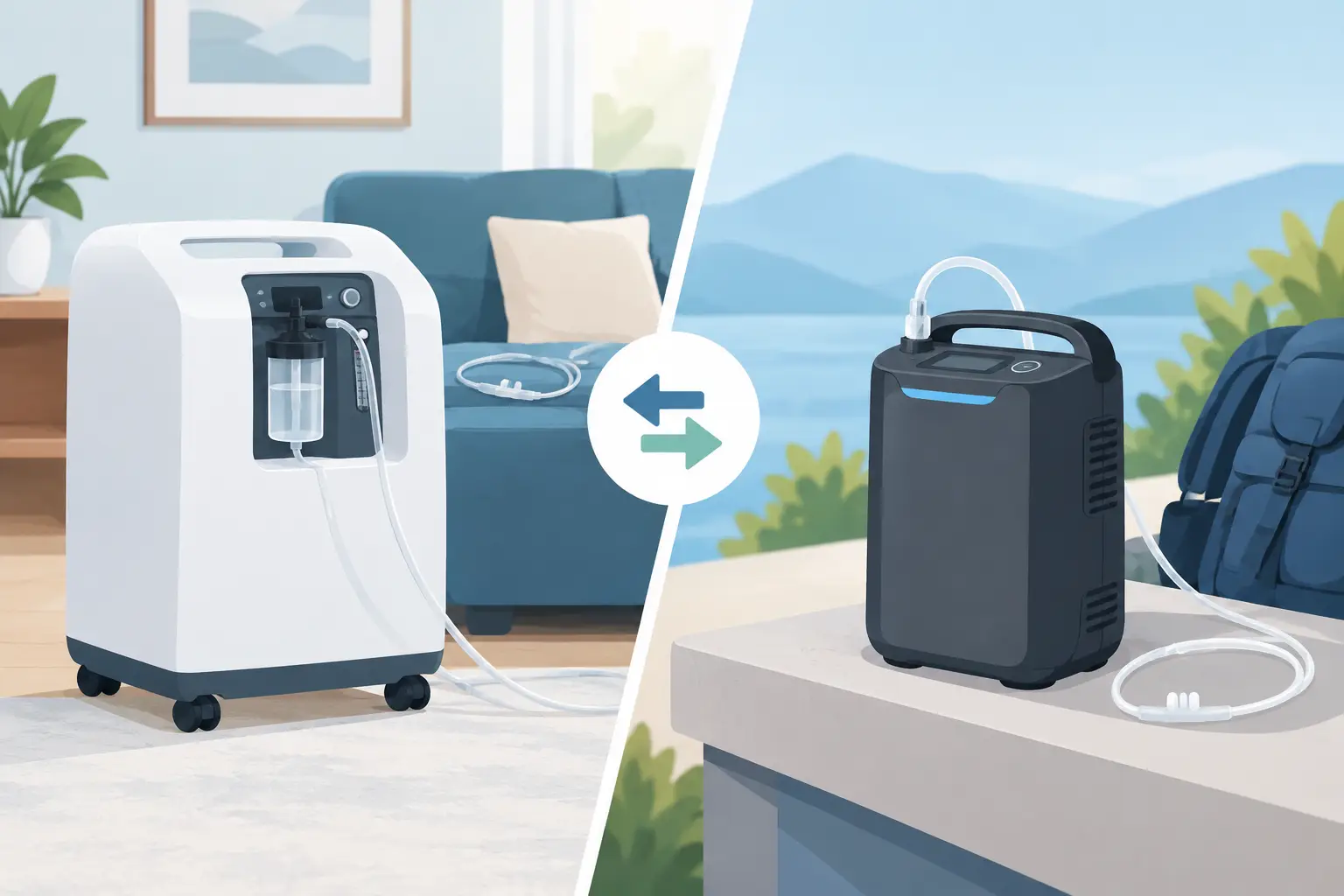
A prescription for oxygen can bring relief, but it can also bring practical questions quickly: What equipment will be in the house? Can you leave home comfortably? Will it provide enough oxygen while you sleep? When comparing home oxygen versus portable concentrator options, the right answer is not simply the smallest device or the one that seems easiest to carry. It is the system that safely meets your prescribed oxygen needs during the activities that matter most to you.
Oxygen therapy is individualized. A device that works well for one person with COPD, pulmonary fibrosis, or another lung condition may not provide adequate support for someone else. Your prescribed flow setting, whether you need continuous flow, how your oxygen levels change with activity, and whether you use oxygen overnight all shape the decision.
Home Oxygen Versus Portable Concentrator: The Core Difference
A home oxygen concentrator is a larger stationary machine designed to stay in one place, usually near a bed or favorite chair. It pulls in room air, separates oxygen from other gases, and delivers concentrated oxygen through tubing. Because it plugs into a wall outlet, it can provide dependable oxygen for long periods without needing cylinder refills or daily battery charging.
A portable oxygen concentrator, often called a POC, uses the same basic principle in a smaller format. It is intended for mobility: trips to the store, medical appointments, family visits, and in some cases air travel. Most portable concentrators run on rechargeable batteries and can also use AC or DC power when available.
The key difference is capacity and delivery method. Many stationary home concentrators can provide higher continuous-flow settings than portable units. Many POCs deliver oxygen only in pulse-dose mode, releasing a measured burst of oxygen when the device detects that you are breathing in. That can be effective for the right patient, but it is not interchangeable with continuous flow.
When a Stationary Home Concentrator May Be the Better Fit
For many people, a stationary concentrator is the foundation of home oxygen therapy. It is particularly useful when oxygen is needed for many hours each day, overnight, or at a higher prescribed continuous-flow rate. It also avoids the concern of a battery running low during sleep.
Long tubing allows you to move around much of your home while the machine stays in one location. The trade-off is that the equipment is not meant to travel with you. It requires electricity, makes some operating noise, and needs a safe, well-ventilated location away from heat sources and open flames.
A home concentrator may be especially appropriate if you have low oxygen levels at rest, need continuous oxygen overnight, or use a flow setting beyond what a portable device can reliably deliver. Some people use a home unit as their primary equipment and keep portable cylinders or a POC for shorter outings.
Power planning matters. Since a stationary concentrator relies on household electricity, your equipment supplier and clinical team can help you understand backup options for an outage. This may include oxygen cylinders, and the plan should reflect your prescribed flow rate and the expected duration of an emergency. Never wait for severe weather or a power failure to find out whether your backup supply is sufficient.
When a Portable Concentrator Can Support a More Active Routine
A portable concentrator can make daily life more flexible. It may allow you to attend appointments, run errands, participate in social events, or travel without managing heavy oxygen tanks. For people who need oxygen only with exertion, a portable device may be the most practical option.
Portability, however, is not the same as unlimited independence. POCs vary substantially in weight, battery duration, maximum settings, and whether they offer continuous flow. Battery life can shorten at higher settings, in cold weather, or with frequent use. A device advertised as lasting several hours may last less time in real-world use, so it is wise to plan around your actual prescription and activity level rather than an ideal estimate.
Pulse-dose devices also require reliable breath detection. Some people may have difficulty triggering a pulse-dose unit during sleep, with shallow breathing, or during more intense activity. Others do very well with this delivery method. The only safe way to know is through clinical assessment and, when appropriate, testing with the specific device and settings.
If travel is a goal, ask early. Some portable concentrators are permitted for air travel, but airline policies differ, and advance arrangements are often required. You may need enough battery power for the full travel time plus delays. A clinician can document your oxygen needs, while the airline and equipment supplier can explain their current requirements.
Your Oxygen Prescription Is More Than a Number
It is tempting to think of oxygen as a simple setting: two liters, three liters, or another number. In practice, a prescription should clarify when you need oxygen and how it should be delivered. A setting on continuous flow is not automatically equivalent to the same-number setting on a pulse-dose portable device.
Your needs may differ when you are sitting quietly, walking, showering, sleeping, or recovering from an illness. People with sleep apnea may also need separate evaluation for sleep-related breathing treatment. Oxygen is not a substitute for CPAP or other prescribed sleep apnea therapy unless a clinician has specifically directed otherwise.
Do not adjust your oxygen flow or replace one device with another based only on how you feel. Too little oxygen may cause symptoms or strain on the body, while unnecessarily high oxygen can also be harmful for certain patients. Your pulmonologist can review symptoms, oxygen measurements, medical history, and testing to determine the safest plan.
Questions to Ask Before Choosing Equipment
A useful conversation with your clinician and oxygen supplier starts with daily life, not just device features. Explain how often you leave home, whether you have stairs, how far you typically walk, where you hope to travel, and whether someone can help with equipment if needed.
Ask whether you require continuous flow or whether pulse dose is appropriate. Confirm the recommended settings at rest, with exertion, and while sleeping. If you are considering a POC, ask to verify that the model can meet your needs under the circumstances you will actually use it, not only while seated in an office.
You should also ask about maintenance, replacement filters or cannulas, battery costs, backup oxygen, insurance coverage, and delivery options. Medicare and private insurance rules can affect the equipment available and the timing of replacement supplies. A care team can help you understand the clinical documentation that may be required, but coverage details should be confirmed with your insurer and supplier.
Safe Oxygen Use at Home and Away
Oxygen supports combustion, meaning it makes fires burn faster and more intensely. Keep oxygen equipment away from smoking, vaping, candles, gas stoves, fireplaces, and other flames or sparks. Do not use petroleum-based products near your nose or equipment unless your clinician or pharmacist says they are safe. Water-based products are generally preferred for nasal dryness, but personalized guidance is best.
Keep tubing arranged to reduce tripping hazards, especially at night. Check your cannula and tubing regularly for kinks, cracks, or loose connections. Follow the manufacturer’s cleaning instructions, and use only the accessories and settings recommended for your equipment.
If you notice worsening shortness of breath, chest pain, bluish lips or fingertips, confusion, fainting, or oxygen readings that remain low despite using oxygen as prescribed, seek urgent medical help. Equipment concerns should never delay care for serious symptoms.
Getting a Plan That Fits Your Life
The best choice is often not home oxygen or a portable concentrator. It may be a stationary unit for sleep and long hours at home, paired with portable equipment for activity and appointments. Your condition, prescription, mobility, home environment, and coverage all matter.
Through secure video visits, a board-certified pulmonary clinician can review your respiratory needs, discuss equipment questions, and help coordinate a treatment plan that fits your day-to-day life. Interstate Pulmonary helps make specialty guidance more accessible when commuting to an office is difficult.
Breathing support should help you participate more fully in life, not leave you guessing about safety or equipment limits. Bring your routine, your concerns, and your goals to the conversation so your oxygen plan can support all three.