
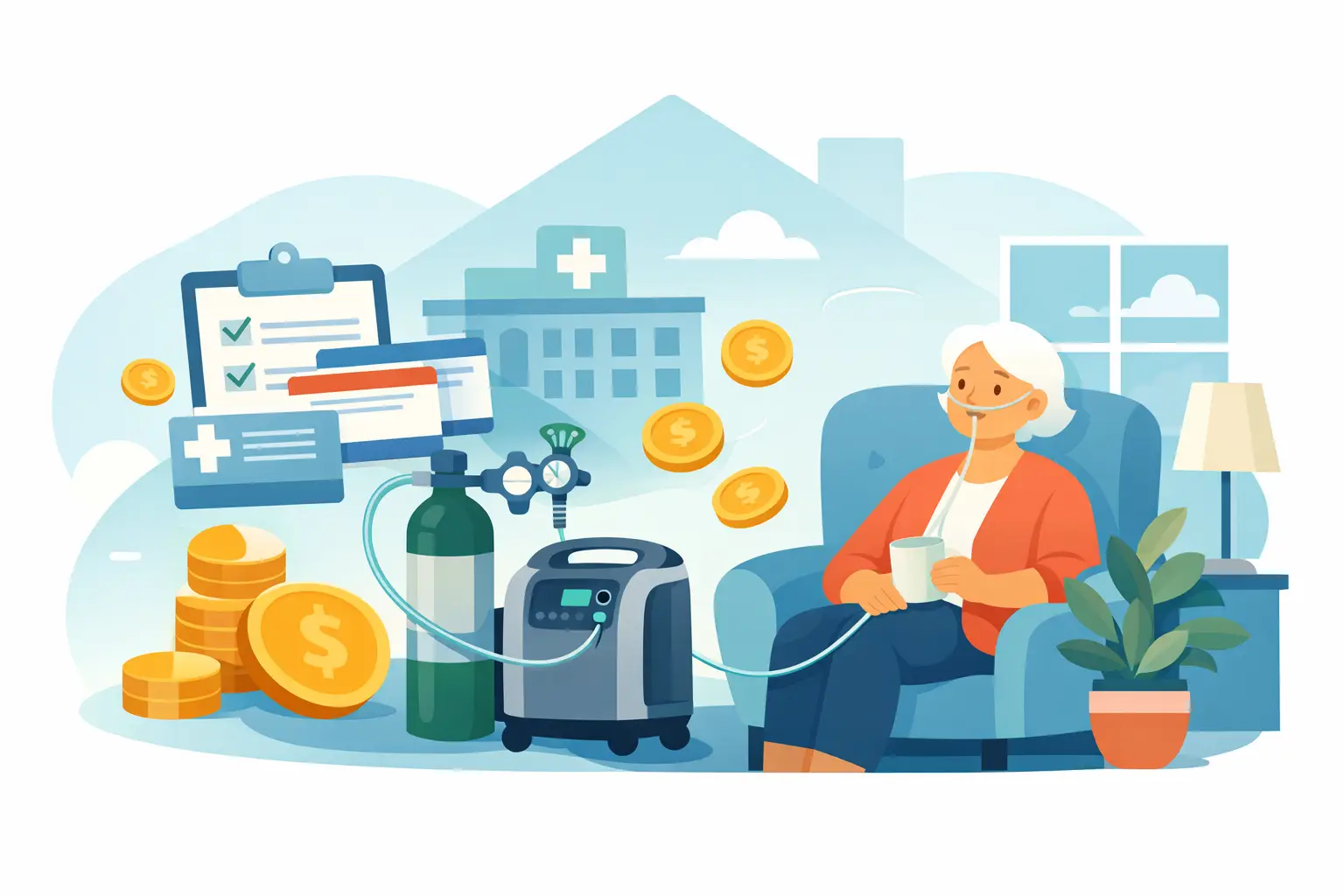
A prescription alone is not always enough to answer, “does Medicare cover home oxygen?” Medicare can help pay for home oxygen when it is medically necessary and you meet its testing, documentation, and supplier requirements. For people living with COPD, pulmonary fibrosis, severe asthma complications, or other lung conditions, understanding those requirements can prevent stressful delays when breathing support is needed at home.
Does Medicare cover home oxygen under Part B?
Original Medicare generally covers home oxygen equipment under Part B as durable medical equipment, often called DME. This may include a stationary oxygen concentrator, portable tanks or a portable concentrator when medically necessary, tubing, humidifier bottles, masks, cannulas, and the oxygen needed to operate the equipment.
Coverage is not automatic for every person who feels short of breath. Medicare requires evidence that oxygen therapy is medically necessary for a diagnosed condition that causes low blood oxygen levels. Your treating clinician must evaluate you, order the oxygen, and document why the therapy is needed.
If you have Original Medicare, you typically pay the Part B deductible if you have not already met it, then 20% of the Medicare-approved amount. Medicare pays the remaining approved share. A Medigap policy or other secondary insurance may help with some out-of-pocket costs, depending on your plan.
Medicare Advantage plans must cover at least the same medically necessary oxygen benefits as Original Medicare. However, the plan may have its own network, prior authorization process, copayments, and equipment suppliers. Before accepting delivery, call your plan to confirm which suppliers are in network and what you may owe.
The medical requirements for Medicare home oxygen coverage
Medicare coverage is based on objective testing, not symptoms alone. Your clinician will usually review pulse oximetry testing or an arterial blood gas test that shows your oxygen level is low enough to qualify. Testing may be performed while you are at rest, sleeping, or exercising, depending on when your oxygen level falls.
In many cases, a blood oxygen saturation of 88% or lower may support coverage. People with slightly higher readings may still qualify when they have certain related findings, such as signs of pulmonary hypertension, cor pulmonale, or significant swelling associated with low oxygen. The exact clinical criteria and documentation rules can be detailed, so your pulmonologist or prescribing clinician should review your results carefully.
Your medical record should also identify the condition being treated and the ordered flow rate, such as how many liters per minute you need. If you need oxygen during activity or overnight, that information matters. A stationary concentrator may be appropriate for home use, while a portable system usually requires documentation that you are mobile and need oxygen away from home.
Oxygen is not routinely covered just because it feels helpful, and it is not a substitute for treating the underlying cause of breathlessness. For example, obstructive sleep apnea is usually treated with CPAP or another positive airway pressure device. Supplemental oxygen may be considered in some situations, but it does not replace appropriate sleep apnea treatment.
What equipment can Medicare help pay for?
The equipment should match your clinical needs and daily routine. Medicare may cover a stationary oxygen concentrator for use at home, portable oxygen equipment for qualifying patients, and the supplies needed to use the system safely.
The type of portable equipment can vary. Some people use compressed gas cylinders, while others may qualify for a portable concentrator. A portable concentrator can be convenient because it does not require regular tank deliveries, but it is not automatically the right option for every prescription. Some devices deliver oxygen in pulses rather than continuous flow, which may not meet every patient’s needs during sleep, at higher flow rates, or with certain breathing patterns.
Talk with your clinician and equipment supplier about how you use oxygen throughout the day. Consider whether you need continuous flow, how long you are away from home, whether you can manage the device weight, and how often you travel. The best option is the one that delivers the prescribed oxygen reliably while fitting your mobility and safety needs.
How the Medicare oxygen rental period works
Medicare generally treats oxygen equipment as a rental rather than a purchase. For a standard 36-month rental period, the supplier is paid a monthly amount for the equipment and related oxygen service. After the 36 months, the supplier generally continues to provide the equipment and service for up to an additional 24 months, as long as you still qualify and need oxygen.
This arrangement can be confusing because the equipment may remain in your home for years. You should not assume you own the concentrator after 36 months. The supplier remains responsible for maintaining the equipment during the applicable service period and must provide needed oxygen supplies under Medicare rules.
If your medical needs change, you move, or your supplier can no longer serve you, the transition may require coordination. Keep copies of your prescription, qualifying test results, and supplier contact information. Those records can make a change smoother.
Choosing a Medicare-approved oxygen supplier
Your supplier plays a major role in what you pay and how easily you receive service. To receive the full Medicare benefit under Original Medicare, use a supplier that participates in Medicare and accepts assignment. Accepting assignment means the supplier agrees to the Medicare-approved amount and cannot charge more than your applicable deductible and coinsurance for covered equipment.
Before equipment is delivered, ask clear questions about monthly costs, delivery, maintenance, emergency support, and replacement supplies. You can also ask whether the supplier handles Medicare billing directly and whether they need any additional documentation from your clinician.
Have these details ready when arranging equipment:
- Your Medicare card and any secondary insurance information
- The oxygen prescription and ordered flow rate
- Recent qualifying oxygen-test results, if requested
- Your home address, delivery access details, and preferred contact number
If a supplier says Medicare will not cover an item, ask why. The issue may be a missing order, an outdated test, a product that is not medically necessary under your current documentation, or a supplier network limitation. A clear explanation helps you and your care team decide what to do next.
When coverage may be delayed or denied
Coverage problems are often documentation problems. A test might not show qualifying low oxygen levels, the ordering clinician may need to clarify the prescription, or the supplier may not have the records Medicare requires. These issues do not necessarily mean oxygen therapy is inappropriate. They mean the clinical and billing requirements need further review.
Coverage can also be affected when oxygen is ordered for a short-term illness. Medicare may cover temporary oxygen in some circumstances, but the medical record must support the need and your clinician may need to reassess you. If your condition improves, Medicare may no longer consider ongoing oxygen medically necessary.
Patients sometimes purchase equipment online to avoid waiting. That can create unexpected expenses, because Medicare usually does not reimburse equipment bought outside its approved process. It may also be difficult to verify whether a device can deliver your prescribed flow rate. Discuss options with a qualified clinician before making a costly purchase.
A practical path to getting home oxygen
Start with an evaluation by a clinician who understands your respiratory condition. They can review your symptoms, medication plan, imaging and pulmonary testing when available, and oxygen measurements. If oxygen is appropriate, they can create a prescription and supporting documentation for a Medicare-approved supplier.
A secure video visit can make that process more convenient when travel is difficult, particularly for follow-up care, prescription updates, and questions about your equipment. Some qualifying tests still need to be completed in person or through an approved testing arrangement. Interstate Pulmonary can help patients connect specialist evaluation with an individualized respiratory treatment plan and equipment support from home.
Do not change your oxygen flow rate on your own unless your clinician has given you a plan for doing so. Too little oxygen may leave you unprotected, while more is not always better for every lung condition. Keep oxygen away from flames, cigarettes, gas stoves, and other heat sources, and make sure household members understand basic oxygen safety.
Breathing support should make daily life feel more manageable, not more complicated. If you are struggling with breathlessness, low oxygen readings, or questions about a current oxygen order, a timely conversation with a pulmonary clinician can help you move forward with the right care and the right documentation.