
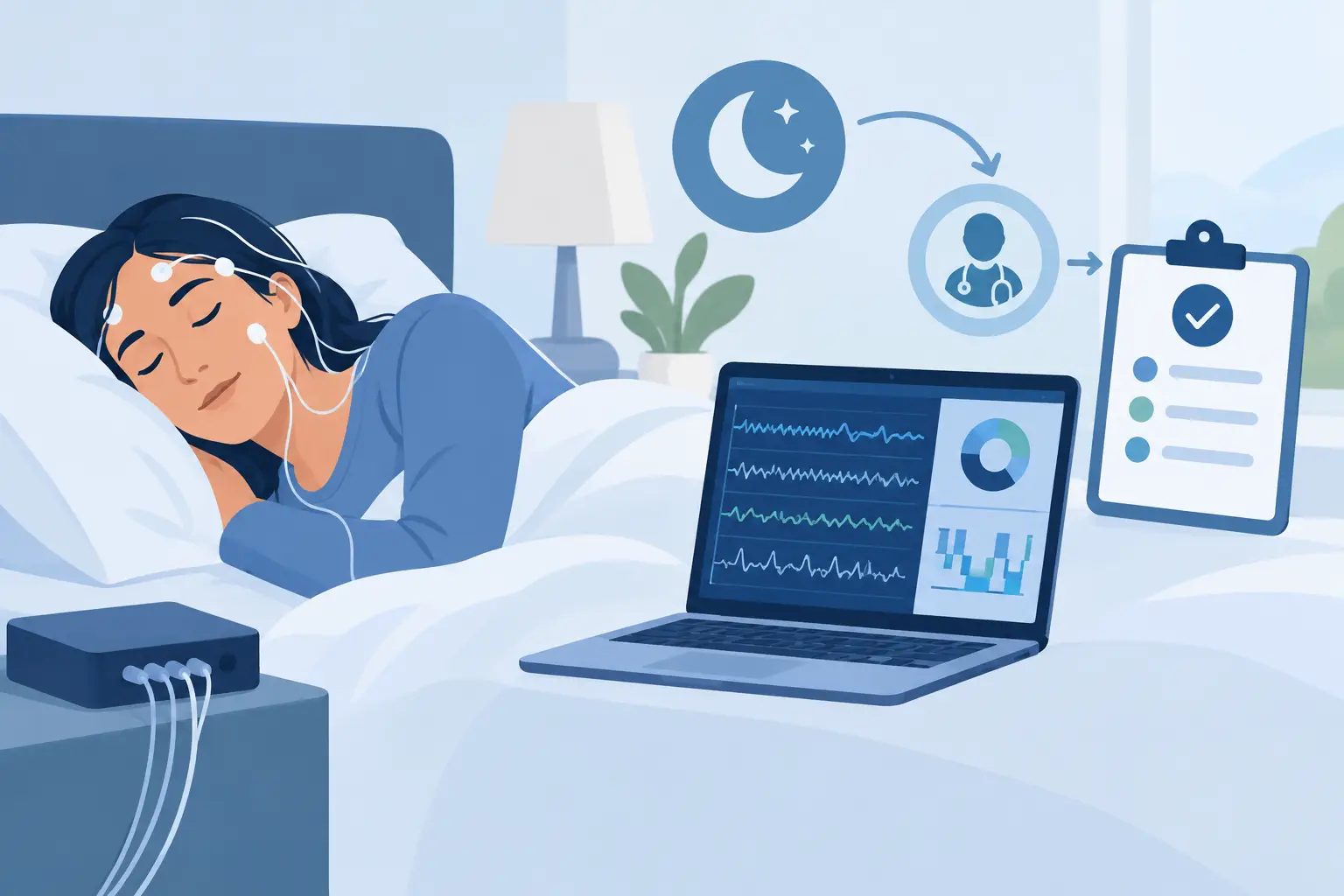
A sleep study report can feel like it was written for a different audience. You may see terms such as AHI, hypopneas, REM sleep, and oxygen desaturation, then wonder whether the results explain why you wake up tired, snore loudly, or struggle to stay alert during the day. This guide to sleep study results translates the most common findings into plain language and explains what usually happens next.
A report is not a diagnosis you need to interpret alone. Your symptoms, health history, medications, body position during sleep, and the type of test you completed all matter. A sleep specialist looks at the full picture before recommending treatment.
What Type of Sleep Study Did You Have?
The first question is whether you completed a home sleep apnea test or an overnight sleep study in a sleep center, often called polysomnography.
A home sleep test is convenient and commonly used when obstructive sleep apnea is suspected. It usually measures breathing effort, airflow, oxygen levels, heart rate, and sometimes body position. It can provide useful evidence of sleep apnea, but it does not directly measure sleep stages or every possible sleep disorder.
An in-lab study collects more detail. In addition to breathing and oxygen, it can track brain activity, eye movements, muscle activity, leg movements, heart rhythm, and sleep stages. This may be recommended when a home test is negative but symptoms remain concerning, or when your clinician suspects another sleep condition.
That difference matters when reading results. A home study may estimate how often breathing events occurred over the recording period, while an in-lab study can calculate them based on actual time asleep. Your specialist will account for this when discussing the numbers.
Your Guide to Sleep Study Results: Key Terms
AHI: Apnea-Hypopnea Index
AHI is often the first number people notice. It represents the average number of apneas and hypopneas per hour of sleep or recording time. An apnea is a pause in breathing. A hypopnea is a partial blockage or reduction in breathing that affects airflow and may lower oxygen levels or disturb sleep.
For adults, AHI is commonly grouped this way:
- Less than 5 events per hour is generally considered within the normal range.
- 5 to 14 events per hour is typically classified as mild sleep apnea.
- 15 to 29 events per hour is typically classified as moderate sleep apnea.
- 30 or more events per hour is typically classified as severe sleep apnea.
These categories are helpful, but they do not tell the whole story. Someone with a lower AHI may still have meaningful daytime fatigue, oxygen drops, high blood pressure, or safety concerns from drowsy driving. Another person may have a higher AHI but fewer noticeable symptoms. Treatment decisions should be individualized.
Oxygen Saturation and Oxygen Desaturation
Your blood oxygen saturation, often shown as SpO2, reflects how much oxygen your blood is carrying. A sleep report may list your average oxygen level, lowest oxygen level, and the amount of time spent below a certain threshold.
Brief drops can occur during breathing events, but repeated or prolonged drops deserve clinical attention. Lower oxygen levels may be especially relevant for people with COPD, asthma, heart disease, obesity, or other lung conditions. A sleep specialist may consider whether the pattern is caused by obstructive sleep apnea alone or whether another respiratory issue could be contributing.
A single lowest oxygen number is not always the most useful finding. The duration and frequency of low-oxygen periods, along with the rest of the study, give a more accurate picture.
Obstructive vs. Central Events
Not every breathing pause has the same cause. Obstructive events happen when the upper airway narrows or closes during sleep, even though the body is still trying to breathe. This is the pattern seen in obstructive sleep apnea, the most common form of sleep apnea.
Central events happen when the brain does not send a consistent signal to breathe for a short period. Central sleep apnea has different potential causes and may require a different evaluation and treatment plan. Your report may include separate numbers for obstructive, central, and mixed apneas.
If central events appear on a report, avoid jumping to conclusions based on the label alone. Some events can occur during transitions between wakefulness and sleep. Your clinician will determine whether the pattern is clinically significant.
RDI and REI
You may see RDI, or respiratory disturbance index, rather than AHI. RDI can include apneas, hypopneas, and other breathing-related disruptions called respiratory effort-related arousals. REI, or respiratory event index, is frequently used for home sleep tests and is based on recorded time rather than confirmed sleep time.
These measures are similar, but they are not interchangeable in every situation. The important question is how often breathing is disrupted and whether those disruptions are affecting your oxygen level, sleep quality, and daily functioning.
Sleep Stages and Arousals
If you had an in-lab study, the report may show time spent awake and in light, deep, and REM sleep. Deep sleep helps support physical restoration, while REM sleep is associated with dreaming and plays a role in memory and emotional processing.
Arousals are brief awakenings that you may not remember in the morning. They can be linked to breathing events, leg movements, noise, pain, or other factors. Frequent arousals can fragment sleep, leaving you unrefreshed even if you spent enough hours in bed.
Sleep apnea can be worse during REM sleep because muscles in the throat relax more. It can also be worse when sleeping on your back. A report may identify these patterns, which can help shape a treatment discussion.
What an Abnormal Result May Mean
An abnormal sleep study does not automatically mean one specific treatment is right for you. The best plan depends on the severity and type of breathing events, your oxygen findings, symptoms, preferences, other medical conditions, and prior treatment experience.
For obstructive sleep apnea, positive airway pressure therapy, commonly called CPAP, is often an effective option. The device uses gentle air pressure to help keep the airway open during sleep. Some people benefit from other approaches, such as positional therapy, an oral appliance fitted by a qualified dental professional, weight management support when appropriate, nasal treatment, or surgery in selected cases.
If the results suggest central sleep apnea, significant overnight oxygen issues, or a more complex breathing pattern, the next step may involve additional testing or a more specialized treatment plan. This is where clinician guidance is particularly valuable.
Questions to Bring to Your Follow-Up Visit
Your follow-up appointment should make the report more useful, not more confusing. Ask your sleep specialist whether the test clearly shows sleep apnea, what type is present, and how severe it appears. Ask how your oxygen levels looked, whether your condition was worse in REM sleep or while on your back, and whether another test is needed.
It is also reasonable to ask how the findings relate to your daily symptoms. If you are waking with headaches, experiencing daytime sleepiness, having trouble controlling blood pressure, or noticing shortness of breath, say so. These details help your clinician tailor the plan.
If treatment is recommended, ask what success will look like. For example, you may discuss fewer breathing events, improved oxygen levels, less snoring, better energy, or more consistent use of a prescribed device. Comfort and follow-through matter. A treatment only helps when it fits into real life.
Getting Care Without the Commute
For many patients, reviewing sleep study results does not need to mean another long drive or time spent in a waiting room. A secure video visit can allow you to discuss findings, symptoms, prescriptions, and equipment needs from home. Interstate Pulmonary connects patients with board-certified pulmonary and sleep specialists who can help interpret results and create a personalized next step.
Bring a copy of your report if you have one, along with a short list of symptoms and questions. If you already use CPAP or another sleep device, note what is working and what is getting in the way. Mask discomfort, dry mouth, pressure concerns, and inconsistent use are common issues that can often be addressed.
Your sleep study is a starting point for better-rested days and safer nights. The most helpful next step is a clear conversation with a qualified clinician who can turn the data into care that works for your health, schedule, and life.