
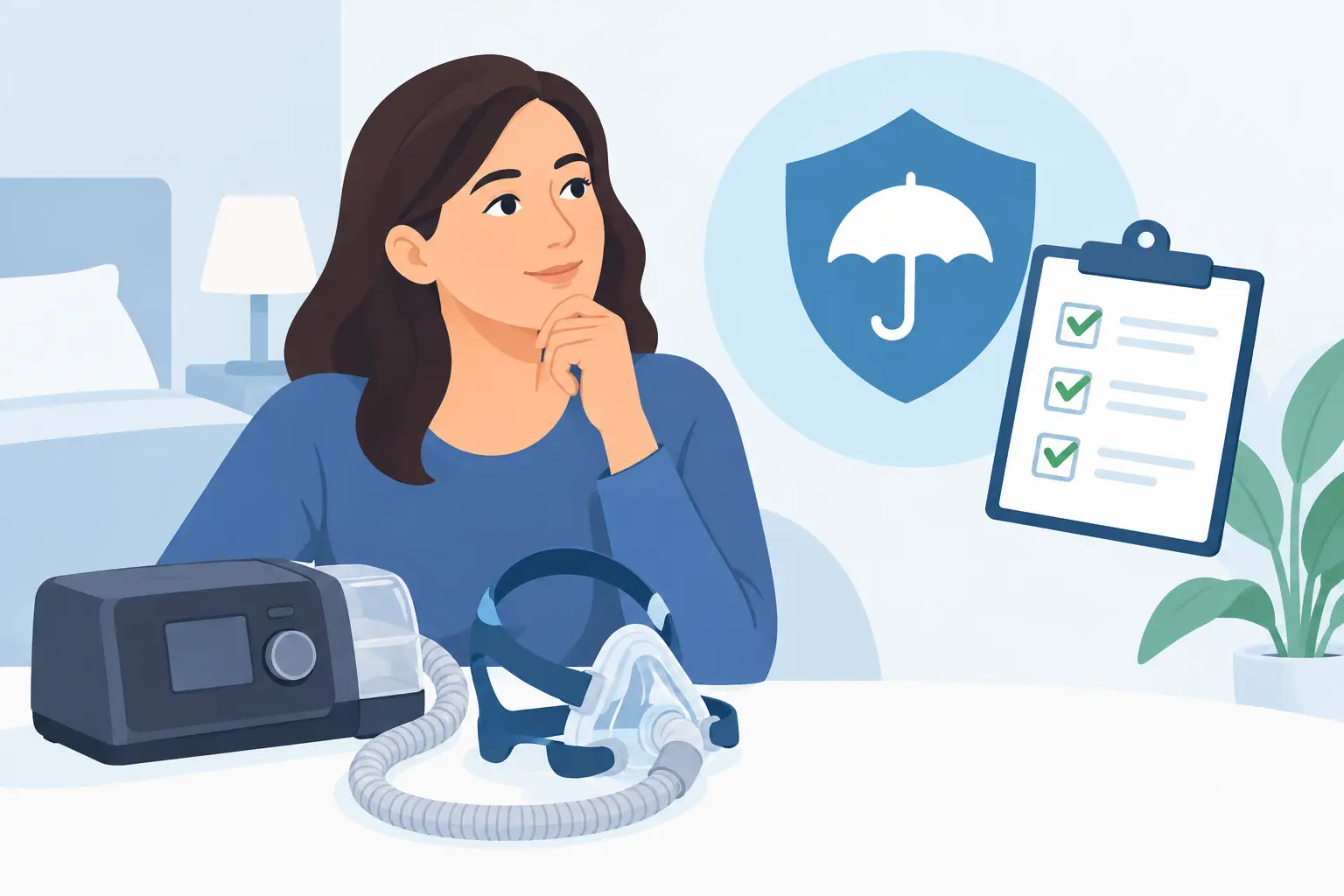
The first bill for CPAP therapy can be surprising when you expected insurance to cover everything. Your plan may cover the machine, mask, tubing, and follow-up care, but the details can affect where you get equipment, what you pay upfront, and what you need to do to keep coverage active. Asking the right CPAP insurance questions before equipment is ordered can prevent delays and help you begin sleep apnea treatment with fewer surprises.
Start with what your plan actually covers
CPAP equipment is usually billed as durable medical equipment, often called DME. Many health plans cover it when it is medically necessary and supported by a sleep study and prescription. That does not necessarily mean the plan pays 100 percent of the cost.
Your responsibility may depend on your deductible, copay, or coinsurance. If you have not met your deductible, you may pay more at the start of the plan year. With coinsurance, you pay a percentage of the insurer-approved amount after the deductible is met. The amount can also vary depending on whether the equipment supplier is in your network.
Ask your insurance company whether it covers the CPAP device as a rental, a purchase, or a rental-to-own arrangement. Some plans make monthly payments to a supplier for a set period before the device becomes yours. Others may authorize a purchase more directly. Knowing the billing structure helps you understand whether you should expect one larger bill or several smaller ones over time.
Coverage rules vary by plan, even when two people have the same insurance carrier. The most useful answer will come from your specific member benefits rather than a general statement that “CPAP is covered.”
CPAP insurance questions to ask before ordering equipment
Before selecting a supplier or accepting a device shipment, call the number on the back of your insurance card. Have your member ID, diagnosis information if available, and the name of your prescribing clinician ready. A short conversation can clarify the next steps.
Ask these questions directly:
- Is CPAP therapy covered under my plan’s durable medical equipment benefit?
- Do I need prior authorization before receiving a CPAP machine or supplies?
- What are my deductible, copay, or coinsurance responsibilities?
- Which in-network CPAP equipment suppliers can I use?
- Is the machine rented, purchased, or rented before ownership transfers?
- Does my plan require proof that I am using the device regularly?
- How often does the plan cover masks, cushions, filters, tubing, humidifier chambers, and headgear?
Request the name of the representative you speak with, the date of the call, and a reference number if one is available. This is helpful if a claim is later delayed or if you receive information that conflicts with a bill.
Understand prior authorization and medical documentation
Prior authorization is an insurer’s approval process before it agrees to cover a service or piece of equipment. Not every plan requires it, but when it is required, ordering equipment too early can create avoidable out-of-pocket costs.
Insurance companies commonly need clinical documentation showing that CPAP is medically necessary. This may include your sleep study report, diagnosis of obstructive sleep apnea, prescription, and notes from a qualified clinician. A clear prescription should identify the prescribed therapy and pressure settings or indicate that an auto-adjusting device is appropriate.
If you completed a home sleep apnea test, ask whether your insurance accepts that test for CPAP coverage. Many plans do, but requirements differ. People with certain medical conditions or complex sleep concerns may need an in-lab study instead. Your sleep specialist can help determine the appropriate evaluation and provide documentation that reflects your individual situation.
Know how CPAP compliance can affect coverage
One of the most common CPAP insurance questions involves compliance. Some insurance plans require usage data during the first months of treatment to continue paying for a rented device. Modern CPAP machines can record information such as hours used, mask leak, and treatment effectiveness.
A commonly used benchmark is using the device for at least four hours per night on 70 percent of nights during a defined review period. However, that is not a universal rule. Your plan may use different timeframes, documentation methods, or requirements, so confirm the details with your insurer and equipment supplier.
Compliance should not be viewed as a test you have to pass alone. If you are removing your mask in your sleep, waking with dry mouth, feeling pressure discomfort, or dealing with leaks, contact your clinical team promptly. Small adjustments to mask fit, humidity, pressure settings, or comfort features can make a meaningful difference. Early support also creates a treatment record showing that you are actively working to use therapy successfully.
Ask which supplier is in network
Your clinician may send a prescription to a durable medical equipment supplier, but you may still have a choice of suppliers. Using an out-of-network supplier can lead to much higher costs or no coverage at all, depending on your plan.
Confirm that the supplier is in network for both the machine and recurring supplies. Also ask whether the supplier will verify benefits before shipping, submit claims on your behalf, and provide an estimate of your expected cost. A reliable supplier should explain what is being billed and when you may receive statements.
You can also ask whether the supplier offers the mask options your clinician recommends. Mask comfort matters. A nasal mask, nasal pillows, or a full-face mask may work differently depending on whether you breathe through your mouth, experience nasal congestion, sleep on your side, or need a particular fit. Insurance coverage may set limits, but clinical comfort should remain part of the conversation.
Replacement schedules are coverage limits, not automatic shipments
Insurance often covers CPAP supplies on a replacement schedule. For example, your plan may allow new cushions more frequently than a new mask frame or humidifier chamber. These schedules are designed around typical wear, hygiene, and performance needs.
Still, “eligible for replacement” does not always mean you must accept every item on schedule. Review what you actually need. If a supplier contacts you about a resupply order, confirm which items are being sent, whether they are covered, and what your share of the cost will be.
It is also reasonable to ask how your plan handles an item that wears out early or breaks. Coverage for an early replacement may require documentation from the supplier or clinician. Keeping your equipment clean and replacing components when needed can support effective treatment while reducing frustration from leaks or worn materials.
Telehealth can make the insurance process easier
Insurance paperwork should not stand between you and better sleep. A remote visit with a board-certified sleep specialist can help you review your diagnosis, discuss treatment options, receive an electronic prescription, and address concerns about equipment use without adding a commute to your schedule.
At Interstate Pulmonary, patients can meet with pulmonary and sleep-health clinicians through secure video care and receive individualized guidance for sleep apnea treatment. When equipment support is needed, having a clinical team that understands the documentation process can help keep care coordinated between your evaluation, prescription, pharmacy or supplier, and follow-up needs.
Telehealth does not change your insurer’s benefit rules, but it can make it easier to get timely answers when a prescription needs clarification, a compliance concern arises, or a mask issue is making therapy difficult.
If coverage is denied or the bill seems wrong
A denial does not always mean CPAP therapy is unavailable to you. First, review the explanation of benefits from your insurer. It may identify a missing authorization, an out-of-network supplier, incomplete documentation, or a coding issue. These problems can sometimes be corrected and resubmitted.
Call the insurer and ask for the specific reason for the denial, the appeal deadline, and the records needed for reconsideration. Your prescribing clinician may be able to provide additional notes, a corrected order, or evidence of medical necessity. If the issue is cost rather than denial, ask the supplier about payment options and request a clear itemized estimate.
CPAP treatment works best when the practical details support the clinical plan. Take a few minutes to verify your benefits, save your call notes, and speak up early if something does not add up. That preparation can help you focus less on paperwork and more on getting the consistent, restorative sleep your health deserves.