
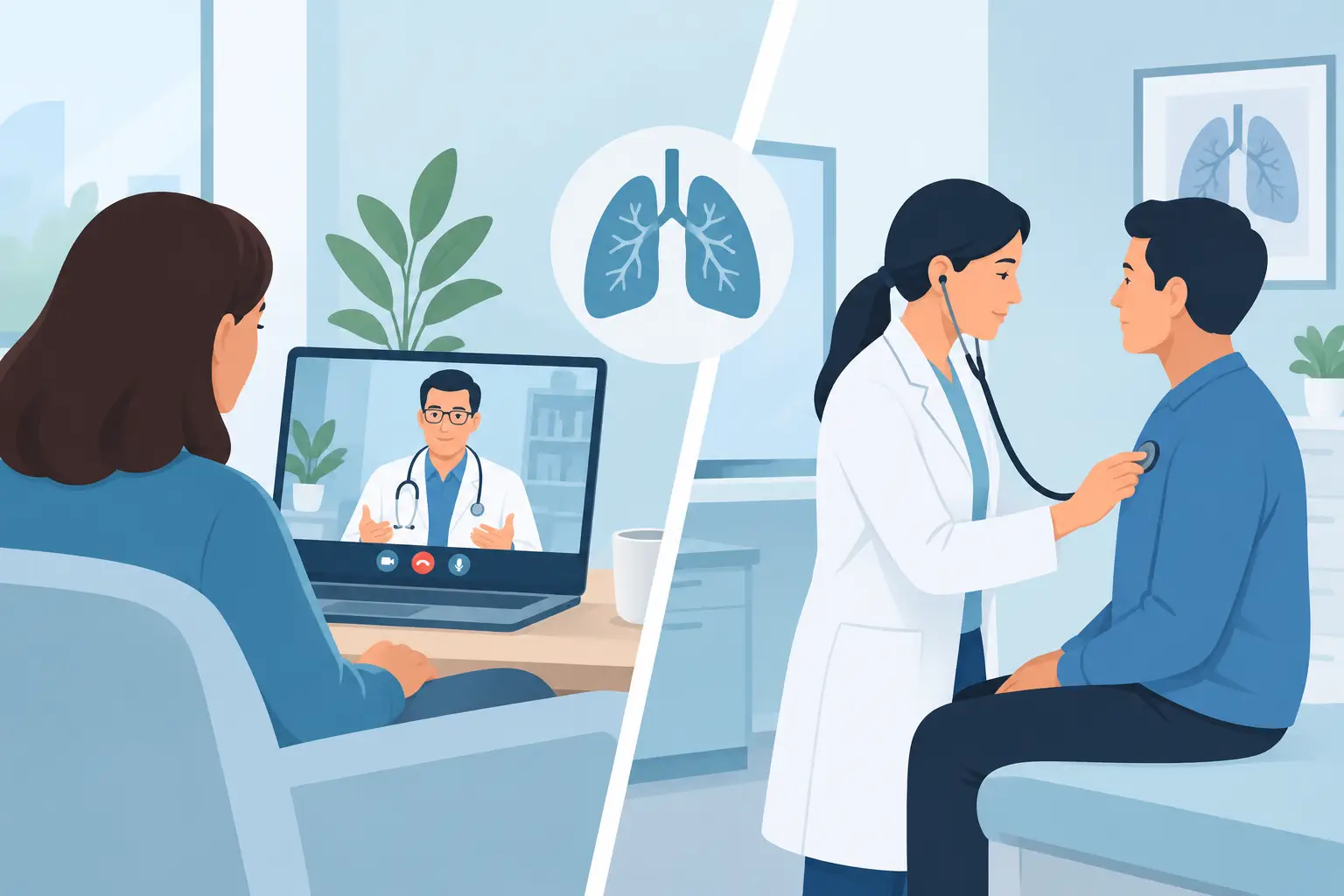
A pulmonary appointment should help you breathe easier, not add a long drive, a crowded waiting room, and hours away from work or family to an already difficult day. When comparing telehealth versus office pulmonology care, the best choice depends on your symptoms, the type of evaluation you need, and where you are in your treatment. For many people with COPD, asthma, sleep apnea, or ongoing breathing concerns, virtual specialty care can handle much more than they expect.
What Telehealth Pulmonology Can Do
Telehealth pulmonary care is a secure video visit with a qualified respiratory or sleep specialist. You can discuss symptoms, review your medical history, go over test results, and build a treatment plan from home. Before the appointment, you typically complete an intake questionnaire so the clinician can understand your concerns and make the visit more productive.
For established conditions, a virtual visit often works well for medication management, refill needs, reviewing inhaler technique, discussing flare-ups, and checking whether your treatment is helping. A pulmonologist can talk through issues such as increasing shortness of breath, a persistent cough, poor sleep, wheezing, daytime fatigue, or difficulty using a CPAP device.
Remote care can also support the practical parts of treatment. When clinically appropriate, prescriptions can be sent electronically to your local pharmacy. If you need respiratory or sleep equipment, your care team may help coordinate the process so equipment can be delivered to your home. That continuity matters when managing a chronic condition that does not pause because it is inconvenient to travel.
A video visit is not a less personal version of care. It is a different setting for a focused clinical conversation. You can meet with a board-certified clinician from a familiar environment, have your medication bottles nearby, and include a family member or caregiver when helpful. For patients whose mobility, oxygen needs, work schedules, or distance from a specialist make office visits difficult, that can remove a significant barrier to ongoing care.
When an Office Visit May Be the Better Choice
There are times when an in-person exam is necessary or simply more useful. A clinician may recommend office-based care when they need to listen closely to your lungs, check vital signs in person, perform or arrange certain testing, or evaluate a new problem that cannot be safely assessed by video alone.
Pulmonary function testing, imaging, blood work, and sleep studies may still take place at a clinic, hospital, lab, or testing center. Telehealth does not replace every diagnostic service. It can, however, make specialist guidance more accessible before and after those services are completed. Your pulmonologist can help determine which tests are appropriate, explain what the results mean, and adjust your plan without requiring a separate office trip for every conversation.
An office visit may also make sense if your symptoms are changing quickly, if you have complex medical needs, or if your clinician believes an in-person assessment will provide safer answers. The goal is not to force every concern into a virtual format. It is to use the care setting that best supports your health at that moment.
Telehealth Versus Office Pulmonology Care: The Real Trade-Offs
The most noticeable difference is convenience. Office care often requires transportation, time off, parking, check-in, and time in a waiting room. Telehealth lets you attend from home, which can be especially valuable for people who become breathless with exertion, rely on oxygen, live far from a pulmonary specialist, or have trouble arranging rides.
Virtual care also makes follow-up easier to keep. Chronic respiratory conditions often require adjustments over time. A new inhaler may need review after a few weeks. CPAP therapy may need troubleshooting. COPD symptoms may need a prompt conversation before they become harder to manage. When scheduling follow-up is easier, patients may be more likely to stay connected with their care plan.
Still, telehealth requires a private place for the visit, a phone, tablet, or computer with a camera, and a reliable internet connection. Some people also prefer the reassurance of being in the same room as their clinician. Those preferences are valid. Good care should fit your medical needs and your comfort level.
For many patients, the answer is not telehealth or office care forever. It is a flexible combination. You may complete an initial virtual consultation, have testing performed locally when needed, and return to video visits for results, prescriptions, and ongoing treatment guidance. This approach can preserve in-person resources for the moments when they matter most.
How Telehealth Supports Common Respiratory and Sleep Needs
For COPD, virtual pulmonary care can provide a convenient setting to discuss breathlessness, coughing, mucus changes, inhaler use, oxygen questions, smoking cessation support, and exacerbation-prevention strategies. Your clinician can review whether your current medications are controlling symptoms and explain when a change in treatment or additional testing may be needed.
For asthma, remote appointments can help identify patterns around triggers, nighttime symptoms, rescue inhaler use, allergies, exercise, and seasonal changes. Having your inhalers within reach during the appointment can make it easier to review your routine and correct any technique concerns.
For sleep apnea, telehealth can be particularly useful for discussing snoring, witnessed pauses in breathing, fatigue, CPAP comfort, mask fit concerns, and treatment adherence. Sleep-related symptoms affect more than nighttime rest. They can affect energy, mood, concentration, blood pressure, and quality of life. A timely conversation with a sleep specialist can help you move forward without waiting weeks for an office appointment.
Interstate Pulmonary is built around this kind of end-to-end virtual support: a guided intake, secure consultation with a specialist, individualized recommendations, pharmacy-ready prescriptions, and help navigating respiratory or sleep equipment needs.
Know When to Seek Urgent In-Person Help
Telehealth is appropriate for many non-emergency concerns, but it is not a substitute for emergency care. Call 911 or seek immediate emergency evaluation for severe trouble breathing, blue or gray lips or face, chest pain or pressure, fainting, sudden confusion, coughing up a large amount of blood, or symptoms that feel life-threatening.
You should also contact a clinician promptly if your breathing is getting worse, you are using your rescue inhaler more often than usual, you have new swelling, fever with respiratory symptoms, or your home oxygen readings are significantly below the range your care team has advised for you. Do not wait for a routine video visit if your condition is rapidly declining.
Making the Most of a Virtual Pulmonary Visit
A little preparation can make a telehealth appointment more useful. Choose a quiet, well-lit space and test your device before the visit. Keep a current medication list nearby, including inhalers, nebulizer treatments, oxygen settings, and over-the-counter products. If you track symptoms, home oxygen readings, CPAP data, peak flow readings, or sleep patterns, have those details ready to discuss.
It also helps to describe changes clearly. Rather than saying you are “more short of breath,” explain when it happens, how long it has been occurring, what activities bring it on, and whether anything improves or worsens it. Mention recent urgent care visits, hospital stays, infections, medication changes, or equipment problems. These details help your specialist make informed recommendations.
The right pulmonary care model should make it easier to stay engaged with your health. If travel and wait times have delayed the support you need, a secure video visit may be a practical next step toward clearer answers, consistent treatment, and more confident breathing at home.