
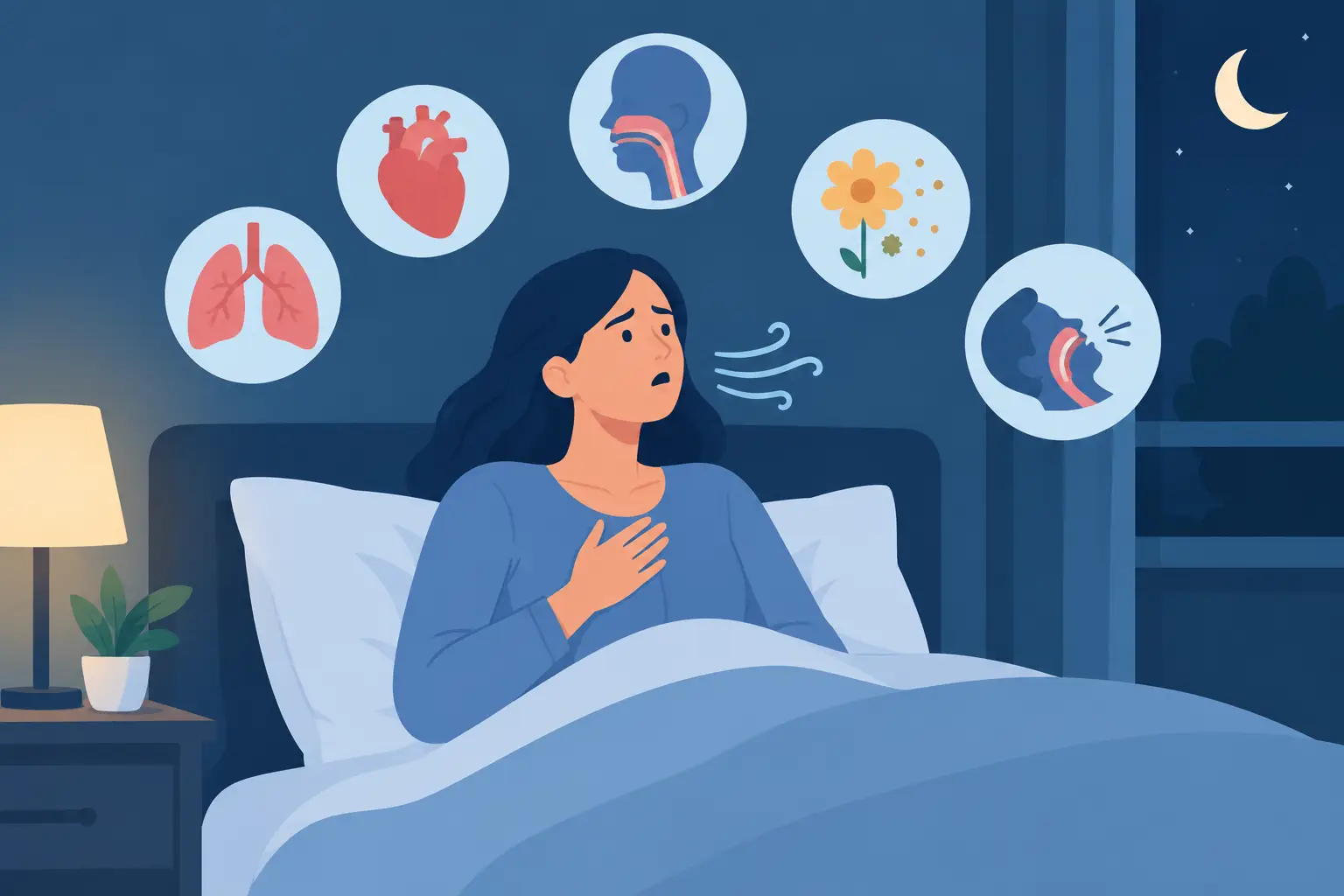
Waking up short of breath can feel alarming, especially when it happens more than once. The top causes nighttime breathlessness range from treatable sleep and lung conditions to heart-related concerns, reflux, and respiratory infections. The pattern matters: whether symptoms begin as you lie down, wake you suddenly from sleep, or occur with coughing, wheezing, chest pressure, or snoring can help a clinician identify what needs attention.
Nighttime breathing changes should not be ignored or simply blamed on getting older, stress, or poor sleep. Many causes can be managed with an individualized plan, but the right treatment depends on an accurate evaluation.
When nighttime breathlessness needs emergency care
Call 911 or seek emergency care right away if shortness of breath is severe, sudden, or accompanied by chest pain or pressure, fainting, confusion, blue or gray lips, or difficulty speaking in full sentences. These symptoms can signal a serious heart, lung, or blood-clot emergency.
Prompt medical attention is also needed when breathlessness worsens quickly, follows an allergic reaction, occurs after a recent surgery or long period of immobility, or comes with coughing up blood. If symptoms are less severe but recurring, a pulmonary or sleep evaluation can help determine the cause before the problem becomes more disruptive.
Top causes of nighttime breathlessness
Sleep apnea
Obstructive sleep apnea is one of the most common reasons people wake up gasping or feeling as though they cannot get enough air. During sleep, the upper airway repeatedly narrows or closes. The brain briefly wakes the body to restart breathing, sometimes so quickly that a person does not remember it the next morning.
Loud snoring, witnessed pauses in breathing, choking or gasping during sleep, morning headaches, dry mouth, and daytime sleepiness are common clues. Sleep apnea can affect people of many body types and ages, although excess weight, nasal congestion, alcohol near bedtime, and certain jaw or airway features can raise risk. Untreated sleep apnea can also contribute to high blood pressure and strain on the heart.
A sleep study can clarify whether apnea is present and how severe it is. Treatment may include CPAP or other positive-airway-pressure equipment, an oral appliance in selected cases, positional changes, weight management, or treatment for nasal obstruction.
Asthma that worsens at night
Asthma symptoms often become more noticeable at night because airways can naturally become more reactive during sleep. Bedroom triggers such as dust mites, pet dander, mold, smoke, cold air, or fragrance can add to the problem. Some people notice chest tightness, coughing, wheezing, or a need to use a rescue inhaler after lying down.
Needing a rescue inhaler at night, waking from cough or wheeze, or limiting activity because of breathing symptoms can mean asthma is not well controlled. The solution is not always simply using more quick-relief medication. A clinician may need to review inhaler technique, daily controller treatment, trigger exposure, allergies, and whether another condition is contributing to symptoms.
COPD and chronic lung disease
People with COPD, emphysema, chronic bronchitis, pulmonary fibrosis, or other lung conditions may feel more short of breath at night for several reasons. Mucus can collect when lying down, airway irritation may worsen, and the effort of breathing can become more noticeable in a quiet room. Some people also have both COPD and sleep apnea, a combination that deserves careful attention.
A change from a person’s usual breathing pattern matters. Increasing cough, new or thicker mucus, wheezing, fever, lower oxygen readings when prescribed monitoring is available, or reduced ability to do normal activities may point to an exacerbation or infection. Medication adjustments, inhaler review, oxygen assessment when appropriate, and equipment support should be directed by a clinician rather than managed alone.
Heart failure and fluid buildup
Breathlessness that becomes worse after lying flat is called orthopnea. Some people need several pillows or choose to sleep in a recliner because they feel uncomfortable or winded when fully flat. Waking suddenly one to three hours after falling asleep, with a strong need to sit upright for air, can also occur when fluid shifts toward the chest overnight.
Heart failure is one possible cause, particularly when nighttime symptoms occur with ankle or leg swelling, rapid weight gain, fatigue, palpitations, or reduced exercise tolerance. Lung and heart symptoms can overlap, so wheezing does not automatically mean asthma and shortness of breath does not automatically mean a lung disorder. A clinician may recommend an exam, imaging, blood tests, heart evaluation, or pulmonary testing based on your history.
Acid reflux and aspiration
Reflux can do more than cause heartburn. Stomach contents or acid can irritate the throat and airways, leading to nighttime cough, throat clearing, hoarseness, wheezing, or a sensation of breathlessness. Symptoms may be more likely after a large late meal, alcohol, spicy or fatty foods, or lying down soon after eating.
For some people, raising the head of the bed, avoiding meals for several hours before sleep, and discussing reflux treatment with a clinician can reduce symptoms. However, persistent nighttime coughing or choking should not automatically be assumed to be reflux. Sleep apnea, asthma, swallowing problems, and heart or lung conditions can cause similar symptoms.
Respiratory infections, allergies, and nasal blockage
A cold, influenza, COVID-19, bronchitis, pneumonia, or an allergy flare can make nighttime breathing harder. Nasal congestion encourages mouth breathing and may aggravate snoring or sleep apnea. Postnasal drip can trigger coughing once you lie down, while lower-respiratory infections may cause fever, chest discomfort, worsening mucus, and breathlessness with minimal activity.
People with asthma, COPD, or other chronic lung conditions should be especially attentive to a respiratory illness that causes more shortness of breath than usual. Early clinical guidance can help determine whether home care is reasonable or whether testing and treatment are needed.
Anxiety, panic, and breathing-pattern changes
Anxiety can cause real physical shortness of breath, rapid breathing, chest tightness, and a feeling of not getting a satisfying breath. Nighttime panic can wake someone abruptly and feel similar to a heart or lung emergency. At the same time, anxiety should not be used to dismiss recurrent symptoms before medical causes have been considered.
If breathlessness comes with wheezing, snoring, swelling, cough, exertional symptoms, or repeated awakenings, a medical evaluation is particularly worthwhile. Addressing both the physical trigger and the stress that can amplify symptoms often brings the best relief.
Details that help identify the cause
Before an appointment, it can help to note when symptoms happen and what improves them. Does shortness of breath start immediately when you lie down, or does it wake you later? Are you coughing, wheezing, snoring, choking, or experiencing heartburn? Do you need extra pillows? Has your weight, leg swelling, inhaler use, mucus, or activity tolerance changed?
If you use a pulse oximeter, record readings along with symptoms, but do not rely on a device alone to decide whether you need urgent care. Readings can be inaccurate, and a normal number does not rule out a significant problem. Bring a current medication list, including inhalers, over-the-counter sleep aids, and any oxygen or PAP equipment details.
Getting support without putting off care
Recurring nighttime breathlessness deserves a clear plan, particularly if you live with asthma, COPD, suspected sleep apnea, or a chronic cough. A board-certified pulmonary or sleep specialist can review your symptoms, medical history, medications, and sleep concerns, then recommend appropriate testing or treatment. Depending on your needs, that may include pulmonary function testing, a sleep study, imaging, an updated inhaler plan, or help arranging respiratory equipment.
For many patients, secure video care makes it easier to begin that process without a commute or a long wait in a clinic. Interstate Pulmonary provides remote specialty consultations designed to help patients understand their symptoms, receive personalized guidance, and coordinate prescriptions or equipment support from home.
You do not have to accept waking up breathless as part of normal sleep. Paying attention to the pattern and seeking timely clinical guidance can move you closer to calmer nights and more comfortable breathing.