
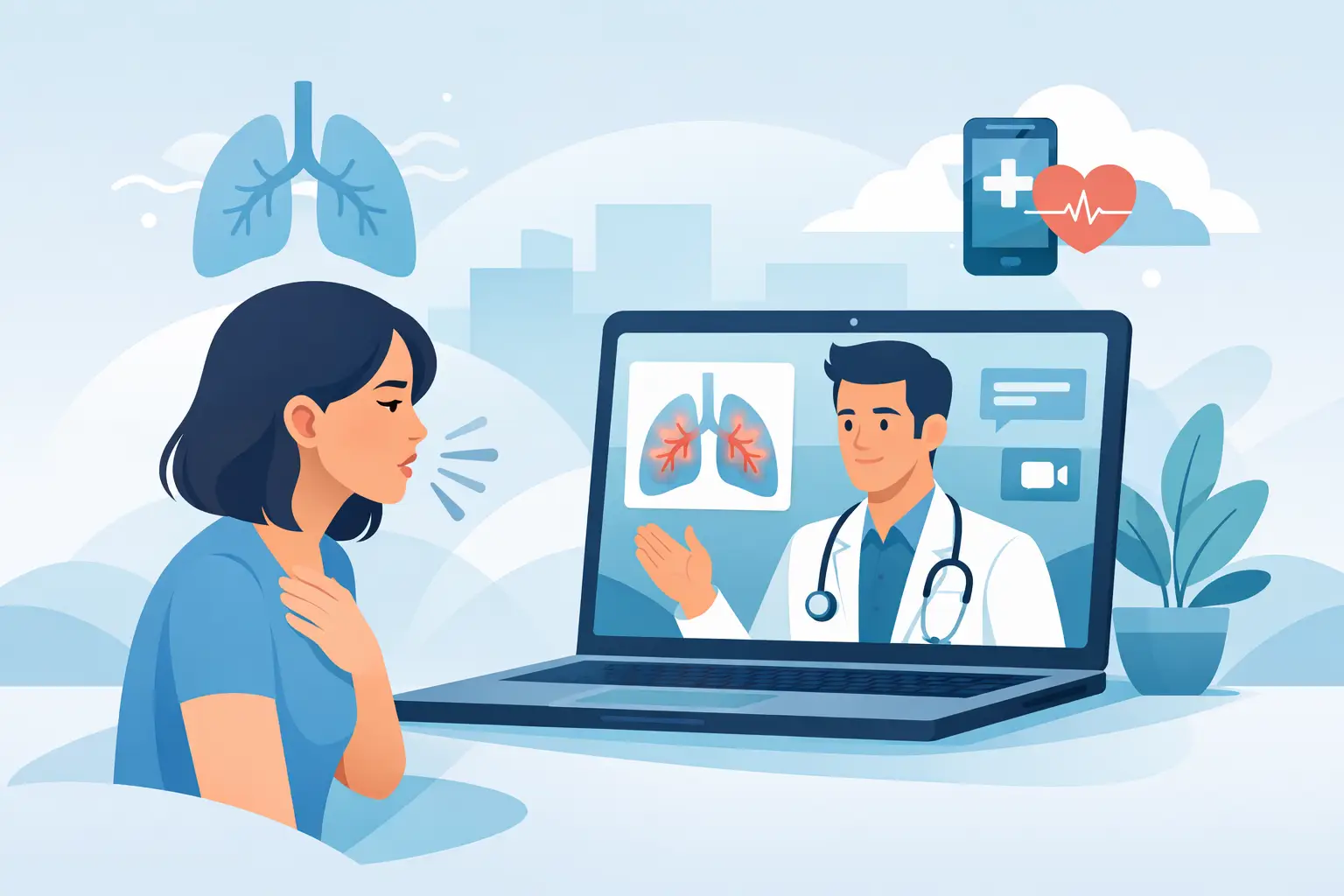
Shortness of breath can turn ordinary moments into difficult ones. Walking to the mailbox, climbing a few stairs, talking through a meeting, or trying to sleep may suddenly feel harder than they should. An online doctor for shortness of breath can help you understand ongoing or recurring breathing symptoms, review your medical history, and create a plan for getting the right level of care without adding a long drive or crowded waiting room to your day.
Still, not every breathing concern should begin with a video visit. The safest next step depends on how quickly symptoms started, how severe they are, and whether other warning signs are present. Knowing the difference can help you act with confidence.
When shortness of breath needs emergency care
Call 911 or seek emergency care right away if breathing trouble is sudden, severe, or getting worse quickly. Do not wait for a telehealth appointment if you are struggling to speak in full sentences, gasping for air, fainting, confused, or noticing blue or gray lips, face, or fingertips.
Chest pain, chest pressure, sweating, nausea, a new irregular heartbeat, or pain that spreads to the arm, jaw, back, or shoulder can also signal a medical emergency. The same is true for shortness of breath after a serious allergic reaction, a major injury, smoke exposure, or suspected choking.
If you have asthma or COPD and your rescue medication is not helping as directed, or your symptoms are rapidly worsening, urgent in-person evaluation may be necessary. Telemedicine is a valuable way to access specialty guidance, but it does not replace emergency services when immediate treatment is needed.
When an online doctor for shortness of breath may be a good fit
Virtual pulmonary care is often well suited to symptoms that are persistent, recurring, or gradually changing rather than sudden and severe. For example, you may notice that you are becoming winded more easily than usual, waking up short of breath, coughing more often, wheezing during exercise, or needing your inhaler more frequently.
A secure video consultation can be especially helpful when you already have a respiratory diagnosis and need ongoing specialty support. People living with asthma, COPD, chronic bronchitis, emphysema, sleep apnea, or other lung conditions may use telehealth to discuss symptom changes, review medications, renew prescriptions, and adjust a treatment plan with clinical oversight.
It can also be a practical starting point when you are not yet sure what is causing your symptoms. Breathlessness has many possible causes. Some relate to the lungs, such as asthma, infection, or COPD. Others may be connected to sleep, allergies, medications, heart conditions, anemia, anxiety, weight changes, or reduced physical conditioning. A pulmonology specialist can listen to the full picture and help determine whether you need testing, medication changes, home monitoring, or an in-person evaluation.
What happens during a virtual pulmonary visit
A telemedicine appointment is more than a quick conversation about symptoms. A board-certified clinician will typically ask when your shortness of breath began, what brings it on, how long it lasts, and whether it improves with rest or medication. They may ask about cough, wheezing, mucus, fever, chest discomfort, swelling in the legs, sleep quality, smoking history, workplace exposures, and past lung or heart conditions.
Be ready to share the names of your current medications, inhalers, and supplements. If you use oxygen, a CPAP or BiPAP device, a nebulizer, or a home pulse oximeter, have that information nearby as well. If you have recent test results, chest imaging, hospital discharge paperwork, or records from another clinician, those details can help create a more complete assessment.
Because the visit takes place by secure video, the clinician cannot perform every part of a hands-on exam. That is an important trade-off. Depending on your symptoms, they may recommend in-person testing such as pulmonary function testing, imaging, lab work, an oxygen assessment, or a sleep study. Virtual care works best when it is part of a thoughtful care plan, not when it delays care you need in person.
How virtual care can support asthma and COPD management
For many people with chronic lung disease, shortness of breath is not the only challenge. There are medication schedules to manage, inhaler techniques to review, equipment needs to coordinate, and flare-ups to recognize early. Consistent access to a pulmonary specialist can make those pieces feel more manageable.
During a remote appointment, your clinician can review whether your current inhalers are controlling symptoms, discuss possible side effects, and make sure you understand when to use a controller medication versus a rescue inhaler. They can also help you identify personal triggers, such as respiratory infections, smoke, seasonal allergens, cold air, or exertion.
For COPD, care may include discussing changes in exercise tolerance, cough, mucus production, oxygen needs, and exacerbation warning signs. For asthma, the focus may include daytime symptoms, nighttime waking, rescue inhaler use, and whether your asthma action plan still fits your needs. Electronic prescriptions can be sent to a local pharmacy, reducing one more step between a treatment decision and receiving medication.
Sleep can affect how breathing feels during the day
Breathlessness and poor sleep often overlap. Waking up gasping, morning headaches, daytime fatigue, loud snoring, or observed pauses in breathing may point to sleep apnea or another sleep-related breathing concern. These symptoms are worth discussing, particularly if tiredness is affecting your work, concentration, driving, or quality of life.
A sleep specialist can evaluate your symptoms remotely and determine whether a sleep study may be appropriate. If treatment such as CPAP is recommended, equipment coordination and ongoing support can help reduce the friction that sometimes keeps people from starting or continuing therapy.
Not every person with shortness of breath has sleep apnea, and not every person with sleep apnea feels short of breath. But bringing up both daytime and nighttime symptoms gives your clinician a clearer view of your respiratory health.
How to prepare for your appointment
A little preparation can make a virtual visit more useful. Choose a quiet, well-lit place with a reliable internet connection, and make sure your phone, tablet, or computer is charged. Write down when symptoms occur and what you were doing at the time. If you have measured your oxygen level at home, record the readings along with the date, time, activity level, and how you felt.
It also helps to think about the questions that matter most to you. You may want to ask whether your symptoms could be related to a known lung condition, whether your inhaler routine needs to change, what warning signs should prompt urgent care, or what tests could clarify the cause. Clear questions lead to a more focused conversation and a plan you can follow at home.
A connected path from consultation to treatment
Specialty respiratory care should not end when a video call does. A useful telehealth experience includes a guided path from intake to consultation, treatment recommendations, prescriptions, follow-up, and support for needed pulmonary equipment. That continuity matters when breathing symptoms affect your ability to work, sleep, travel, or simply move through your day comfortably.
Interstate Pulmonary provides remote access to board-certified pulmonary and sleep specialists who can help patients address ongoing respiratory concerns from home. Care plans are individualized because the right next step for mild, intermittent wheezing may be very different from the right next step for worsening COPD symptoms or suspected sleep apnea.
You do not need to have every answer before asking for help. If your symptoms are not an emergency but are interfering with your daily life, a timely conversation with a pulmonary specialist can be a meaningful step toward clearer answers, steadier breathing, and a plan that fits your routine.