
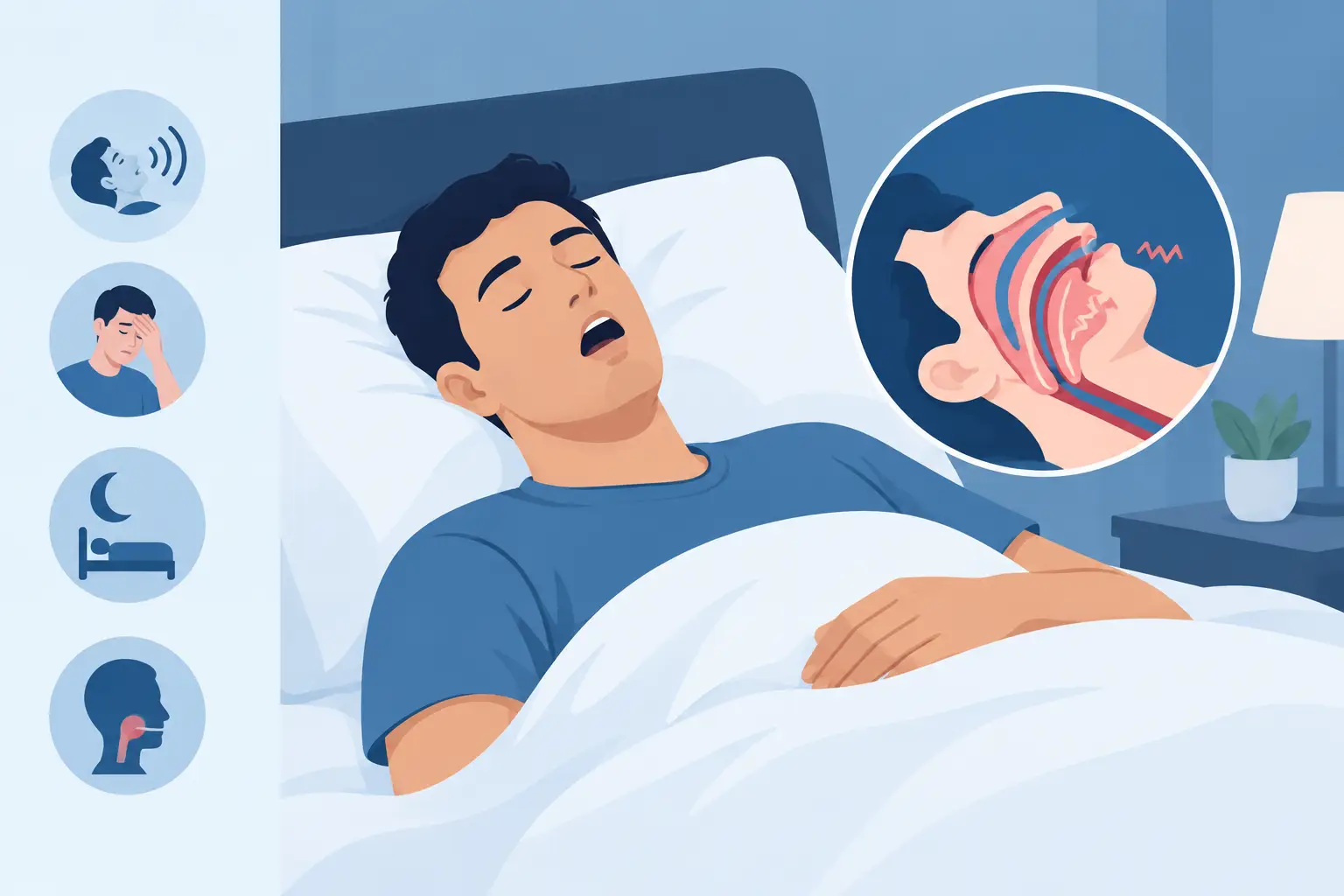
A partner may notice the first clue: breathing that stops, then starts again with a snort, gasp, or loud snore. But you do not need someone else in the room to learn how to recognize sleep apnea. The condition often leaves signs during the day, from persistent fatigue to morning headaches and difficulty focusing. Recognizing those patterns can be the first step toward better sleep, safer driving, and more energy for daily life.
What sleep apnea looks like at night
Sleep apnea is a disorder in which breathing repeatedly pauses or becomes too shallow during sleep. The most common form, obstructive sleep apnea, happens when the muscles in the throat relax enough to narrow or block the airway. The brain briefly reacts to restore breathing, often without the person fully waking up or remembering it.
Loud, frequent snoring is a common sign, but snoring alone does not diagnose sleep apnea. Many people snore without having airway blockages, and some people with sleep apnea do not snore loudly at all. What matters more is the pattern around the snoring.
A bed partner may observe quiet pauses in breathing, followed by choking, gasping, or a sudden snort. Sleep can also seem restless. A person might toss and turn, wake repeatedly, sweat at night, or get up several times to use the bathroom. These interruptions can happen dozens of times in one night, even when the person believes they slept for seven or eight hours.
Dry mouth or a sore throat on waking can also be a clue, especially for people who sleep with their mouths open because they are struggling to move air through the nose or throat. Still, these symptoms can have other causes, such as allergies, a dry bedroom, or certain medications. A sleep evaluation looks at the whole picture rather than any single symptom.
Daytime symptoms can be easier to miss
The effects of sleep apnea do not end when the alarm goes off. Because the body is repeatedly pulled out of deeper, restorative sleep, daytime functioning may suffer. Excessive sleepiness is one of the most recognized symptoms. This is more than feeling reluctant to get out of bed on a busy Monday. It can mean dozing off while reading, watching television, sitting in meetings, or riding as a passenger in a car.
Some people feel tired but wired rather than sleepy. They may rely on several cups of coffee, feel irritable, or have trouble concentrating on work and conversations. Morning headaches, low mood, memory lapses, and reduced interest in sex can occur as well. These symptoms are not specific to sleep apnea, but they deserve attention when they appear alongside snoring, witnessed breathing pauses, or unrefreshing sleep.
Pay close attention to drowsiness while driving. Nodding off at a red light, drifting between lanes, or struggling to stay alert on a familiar drive are safety concerns that should not be brushed off. Avoid driving when you are sleepy and seek medical guidance promptly.
Who is more likely to develop sleep apnea?
Sleep apnea can affect adults of many body types, ages, and genders. It is more common in people with excess weight, but weight is only one part of the risk profile. The size and shape of the jaw, neck, tongue, tonsils, and airway can influence breathing during sleep. Nasal congestion, alcohol use near bedtime, and sedating medications may make airway obstruction worse for some people.
Risk also rises with age, although younger adults can develop sleep apnea. A family history may point to shared airway anatomy or other inherited risk factors. Men are diagnosed more often, yet sleep apnea is frequently underrecognized in women, particularly after menopause. Women may report insomnia, fatigue, mood changes, or headaches instead of the classic complaint of loud snoring.
Certain health conditions deserve extra attention. High blood pressure that remains difficult to control, atrial fibrillation, type 2 diabetes, heart disease, stroke history, and obesity are all associated with obstructive sleep apnea. For people managing COPD, asthma, or other breathing conditions, poor sleep can add another layer of strain. A pulmonary or sleep specialist can help sort out overlapping symptoms and determine whether a sleep study is appropriate.
How to recognize sleep apnea versus ordinary snoring
Ordinary snoring may be occasional, often linked to a cold, allergies, sleeping on the back, or alcohol. It may be loud, but breathing remains relatively steady and the person wakes feeling rested. Sleep apnea is more concerning when snoring is interrupted by pauses, choking, or gasping and is paired with daytime impairment.
Consider the pattern over several weeks. Are you consistently tired despite allowing enough time for sleep? Has someone noticed that you stop breathing? Do you wake with headaches, dry mouth, or a racing heart? Are you falling asleep in situations where you need to stay alert? A cluster of these signs is a stronger reason to talk with a clinician than snoring by itself.
It is also worth remembering that a person can have sleep apnea without a bed partner to observe nighttime breathing. If you live alone, a phone recording may capture loud snoring or gasping, but it cannot diagnose the condition. Wearable devices and apps can offer general sleep information, yet they are not a replacement for clinical testing.
What happens during a sleep apnea evaluation?
A clinician will start by discussing your symptoms, medical history, medications, sleep schedule, and risk factors. They may ask about snoring, witnessed pauses, daytime sleepiness, and any history of heart or lung conditions. This conversation helps determine the right testing approach.
Many patients with suspected obstructive sleep apnea may qualify for a home sleep apnea test. You wear simple sensors overnight in your own bed to measure factors such as breathing effort, airflow, and oxygen levels. Home testing is convenient and can be a useful option when the clinical picture is straightforward.
However, it depends on your health history and symptoms. An in-lab sleep study may be recommended when a home test is not suitable, when results are unclear, or when there may be another sleep or breathing disorder. In-lab testing can collect more detailed information, including sleep stages and leg movements. A negative home test does not always rule out sleep apnea, particularly if symptoms remain strong.
Telemedicine can make the first step easier. Through a secure video consultation, a board-certified pulmonary or sleep clinician can review your concerns, determine whether testing is needed, and discuss the next steps without requiring a commute to a specialty office. If treatment is prescribed, follow-up care matters too. The best plan is one that fits your diagnosis, health needs, and daily routine.
When to seek care sooner
Schedule an evaluation if you have repeated breathing pauses during sleep, loud snoring with gasping, ongoing daytime sleepiness, or fatigue that is affecting your work, relationships, or safety. Seek more urgent medical attention for severe shortness of breath, chest pain, fainting, or new neurologic symptoms such as weakness or trouble speaking.
Sleep apnea is treatable, and treatment can look different from one person to the next. Some people benefit from positive airway pressure therapy, while others may need help addressing nasal blockage, sleep position, weight-related factors, or another contributing issue. The goal is not simply to make snoring quieter. It is to help you breathe more consistently and sleep more restoratively.
If sleep has stopped leaving you refreshed, trust that signal. A thoughtful evaluation can replace uncertainty with a clear plan and bring specialty sleep care closer to home.