
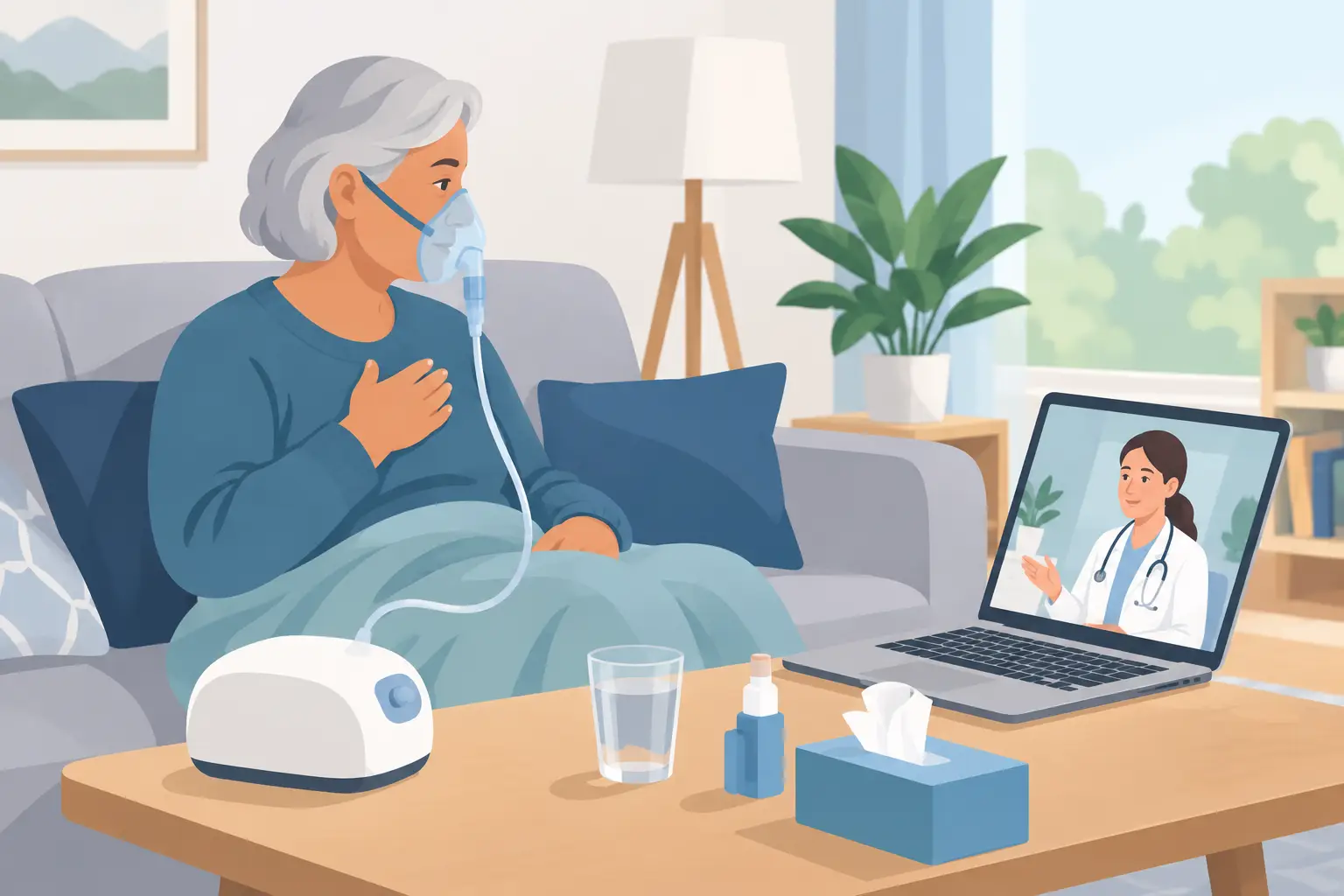
A COPD flareup can make ordinary tasks feel suddenly difficult. You may notice more coughing, thicker mucus, chest tightness, wheezing, or shortness of breath than usual. When symptoms change, knowing how to manage COPD flareups remotely can help you respond early, stay connected with your care team, and make informed decisions about when you need urgent in-person care.
Remote care is not a substitute for emergency treatment. It is a practical way to keep your pulmonary specialist involved between office visits, review symptoms quickly, adjust an established treatment plan when appropriate, and avoid unnecessary travel when breathing feels challenging.
Start With Your COPD Action Plan
The safest way to handle a flareup at home is to follow a COPD action plan created with your clinician. This is a personalized set of instructions that explains what your usual symptoms look like, which changes may signal a flareup, what medications to use, and when to call for help.
If you do not have a written action plan, a virtual pulmonary appointment is a good place to create one. Your specialist can review your diagnosis, current inhalers, oxygen needs, recent flareups, and health history. The goal is to give you clear next steps before symptoms become severe.
Your plan may include instructions for using a quick-relief inhaler or nebulizer, if prescribed. Some patients also have clinician-directed instructions for medicines such as steroids or antibiotics in specific situations. Do not start, stop, share, or change medication doses on your own. The right treatment depends on what is causing the symptom change, your other medical conditions, and the medications you already take.
Know the Early Signs of a Flareup
COPD exacerbations do not always begin with dramatic breathlessness. For many people, the first clue is a change from their normal routine. You might need more breaks while walking across a room, wake up coughing, feel unusually tired, or use your rescue medicine more often than usual.
Pay attention to changes in mucus as well. More mucus, a new yellow, green, or brown color, or mucus that is harder to clear can be useful information for your clinician. So can fever, chills, swelling in the legs, a racing heartbeat, poor sleep, or new confusion.
Write down when symptoms started, what has changed, and what treatments you have used. If you have a pulse oximeter, record the oxygen reading and compare it with the range your clinician has told you is normal for you. A number alone does not tell the whole story. Your symptoms, usual oxygen level, and medical history all matter.
Use a Remote Visit to Get Timely Clinical Guidance
A secure video appointment can make it easier to speak with a pulmonary specialist when a flareup seems to be developing. You can discuss your symptoms from home without arranging transportation or sitting in a waiting room while you are uncomfortable.
Before the visit, gather your inhalers, nebulizer medications, oxygen equipment details, recent oxygen readings if you have them, and a list of every medication you take. Keep your pharmacy information nearby. This helps the clinician identify practical issues, such as an empty inhaler, incorrect technique, missed doses, equipment concerns, or the need for a prescription refill.
During a video consultation, the clinician may ask you to describe your breathing, listen for audible wheezing, review how you use your inhaler, and explain whether you can speak in full sentences. They may also ask about possible triggers, including respiratory infections, smoke exposure, allergies, cold air, missed maintenance medicine, or changes in sleep.
Telemedicine works especially well for early symptom review, follow-up after a recent exacerbation, medication management, and treatment-plan education. It has limits. If your symptoms are severe or worsening quickly, you should not wait for a video appointment.
Make Home Treatment Safer and More Effective
When your care plan calls for treatment at home, focus on the basics that support easier breathing. Use medications exactly as prescribed and check that you are using each inhaler correctly. Even a small technique issue can prevent medicine from reaching your lungs effectively.
Sit upright or lean slightly forward with your arms supported on a table or chair. This position can reduce the work of breathing. Try slow, controlled breathing through pursed lips: breathe in gently through your nose, then exhale slowly through lips shaped as if you are blowing out a candle. Avoid rushing, which can worsen the feeling of air hunger.
If you use prescribed oxygen, use it at the flow rate your clinician ordered. Do not turn the flow up or down without medical guidance. Too little oxygen can be dangerous, but more is not automatically better for every person with COPD.
Keep your environment free from smoke, vaping aerosols, strong fragrances, dust, and other irritants. Drink fluids if your clinician has not told you to limit them, since hydration may make mucus easier to clear. Rest between activities, but do not ignore a steady decline in your ability to move, eat, sleep, or speak comfortably.
When to Seek Emergency Care
Some COPD symptoms need immediate emergency evaluation, not remote management. Call 911 or seek emergency care right away if you have severe trouble breathing, cannot speak in complete sentences because of breathlessness, develop blue or gray lips or fingertips, faint, become confused, have new chest pain or pressure, or feel unusually drowsy.
Also seek urgent help if your prescribed rescue treatment is not helping, symptoms are getting worse quickly, or your oxygen level is far below the range your clinician has established for you. Do not drive yourself if you are severely short of breath, dizzy, confused, or experiencing chest pain.
It is better to get emergency help early than to wait and hope a serious flareup will settle. COPD can overlap with other urgent conditions, including pneumonia, heart problems, blood clots, and severe infections. A clinician needs to assess concerning symptoms promptly.
Prevent the Next Flareup From Catching You Off Guard
After symptoms improve, schedule follow-up with your pulmonary clinician. A flareup is useful clinical information. Your treatment plan may need adjustment, your inhaler technique may need review, or you may need help addressing a trigger at home.
Keep maintenance prescriptions filled before they run low, and ask your clinician about vaccines that can reduce the risk of respiratory illness. If you use a nebulizer, CPAP, oxygen, or other respiratory equipment, address supply or delivery concerns before they interrupt treatment. Remote specialty care can help coordinate prescriptions, equipment support, and ongoing monitoring from home.
At Interstate Pulmonary, board-certified pulmonary specialists can help patients review COPD symptoms through secure video care and build a plan that fits their daily routine. Having a clear route to clinical guidance can make it easier to act when your breathing changes.
A flareup does not have to leave you guessing. Keep your action plan where you can find it, notice changes early, and reach out to your care team before a difficult breathing day becomes a crisis.