
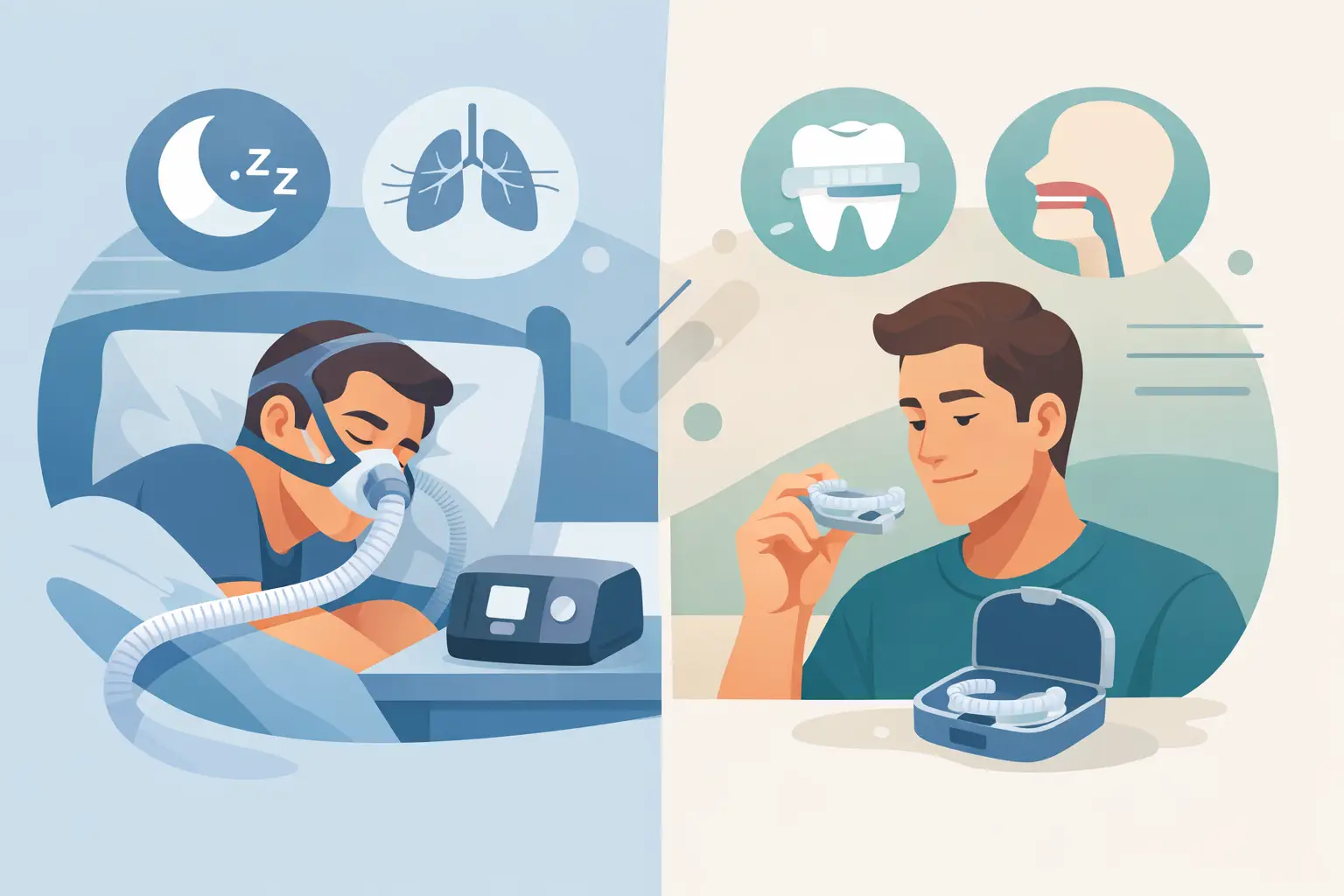
A sleep apnea treatment only works when it fits into your real life – your sleep position, comfort level, travel schedule, dental health, and the severity of your condition. When considering CPAP versus oral appliance therapy, the question is not simply which option is easier. It is which treatment can control your breathing interruptions reliably enough for you to use it consistently.
Both therapies can be effective for obstructive sleep apnea, or OSA. CPAP is generally the most effective treatment for reducing breathing events across a wide range of severities. A custom oral appliance can be a practical and clinically appropriate alternative for many people with mild to moderate OSA, or for those who cannot tolerate CPAP. The right choice starts with an accurate diagnosis and a conversation with a sleep specialist who understands your complete health picture.
How CPAP Treats Sleep Apnea
Continuous positive airway pressure, commonly called CPAP, delivers a gentle stream of pressurized air through a mask. This air pressure keeps the upper airway open while you sleep, helping prevent the repeated pauses in breathing, drops in oxygen, and sleep disruptions caused by OSA.
For many patients, CPAP is the first-line treatment because it is highly effective when used as prescribed. It can treat mild, moderate, and severe obstructive sleep apnea, including cases with substantial oxygen drops or a high number of apnea events per hour. Some people use standard CPAP, while others may be prescribed auto-adjusting PAP, or APAP, which changes pressure within a clinician-set range based on breathing needs.
CPAP does require an adjustment period. A mask may feel unfamiliar at first, and common concerns include dry mouth, nasal congestion, air leaks, or feeling confined by the equipment. These problems are often manageable. A different mask style, heated humidification, pressure adjustments, or coaching on mask fit can make a significant difference.
The key is not to stop treatment without asking for help. If CPAP feels uncomfortable, a sleep clinician can identify what is getting in the way and help you find a more tolerable setup.
CPAP Versus Oral Appliance Therapy: Key Differences
An oral appliance for sleep apnea is not the same as an over-the-counter mouthguard. It is a custom device, typically made and fitted by a qualified dentist, that is worn during sleep. The most common type, called a mandibular advancement device, gently moves the lower jaw forward. That movement can help create more room in the airway and reduce the likelihood of collapse.
The most noticeable difference between CPAP and an oral appliance is how they work. CPAP uses air pressure to hold the airway open. An oral appliance changes the position of the jaw and tongue to improve airflow.
For people with moderate to severe OSA, CPAP usually produces a greater reduction in breathing events and is often better at improving oxygen levels. However, treatment effectiveness has two parts: how well a therapy works when used and how consistently a person can use it. Someone who uses an oral appliance every night may receive more real-world benefit than someone who rarely uses a CPAP machine because of discomfort.
That does not mean convenience should be the only deciding factor. Untreated or undertreated sleep apnea can contribute to daytime sleepiness, trouble concentrating, mood changes, high blood pressure, and increased cardiovascular risk. A treatment should be selected and monitored with the goal of adequately controlling your OSA, not simply making bedtime feel easier.
When CPAP May Be the Better Choice
CPAP is commonly recommended for severe obstructive sleep apnea, marked nighttime oxygen desaturation, or symptoms that create immediate safety concerns, such as excessive daytime drowsiness while driving. It may also be preferred when a sleep study shows a high apnea-hypopnea index, when there are significant heart or lung conditions, or when an oral appliance has not adequately controlled breathing events.
People with chronic respiratory conditions may need particularly thoughtful treatment planning. COPD, asthma, obesity hypoventilation, and certain heart conditions can affect nighttime breathing and the approach to PAP therapy. A board-certified pulmonary or sleep clinician can review sleep-study results alongside your respiratory history, medications, and current symptoms.
CPAP can also be a good option for people who want measurable treatment data. Many modern devices record usage, leak levels, and residual breathing events. This information helps clinicians troubleshoot issues and confirm whether treatment is working as intended.
When an Oral Appliance May Be a Good Fit
Oral appliance therapy is often considered for adults with mild to moderate obstructive sleep apnea. It may also be appropriate for someone with severe OSA who cannot tolerate CPAP, provided that treatment is carefully evaluated and followed by a sleep specialist.
For some patients, an oral appliance is appealing because it is small, quiet, and easy to take on trips. There is no mask, tubing, or bedside machine. It may be especially useful for frequent travelers, people without reliable access to electricity during travel, or those who have tried CPAP with appropriate support and still cannot sleep comfortably with it.
An oral appliance is not appropriate for everyone. Healthy teeth and adequate dental support are usually needed. Active gum disease, significant jaw pain, limited jaw movement, untreated dental problems, or certain bite issues may make it unsuitable or require treatment first. Some users develop temporary jaw soreness, tooth discomfort, dry mouth, or changes in how their teeth meet over time. Regular dental follow-up is part of safe therapy.
A properly fitted device should be custom-made and gradually adjusted. Boil-and-bite devices and store-bought mouthguards may seem convenient, but they are not a substitute for a prescribed, professionally monitored sleep apnea appliance.
Your Sleep Study Should Guide the Decision
The best treatment recommendation comes after confirming the type and severity of sleep apnea. A home sleep apnea test may be appropriate for many adults with a strong likelihood of uncomplicated obstructive sleep apnea. In other situations, an in-lab sleep study may provide more complete information.
This distinction matters because oral appliances and CPAP are used primarily for obstructive sleep apnea. Central sleep apnea, where the brain does not consistently send the signal to breathe, needs a different evaluation and may require different therapies. Treating the wrong type of sleep apnea with an unsuitable device can delay effective care.
Your clinician will also consider factors that are not always visible on a sleep-study report. These include snoring, daytime fatigue, body position during sleep, nasal obstruction, alcohol or sedative use, weight changes, cardiovascular health, and whether you have already attempted PAP therapy.
Follow-Up Is Part of Treatment, Not an Extra Step
Whether you use CPAP or an oral appliance, follow-up helps make sure your symptoms and breathing events are improving. With CPAP, device data can help identify air leaks, pressure concerns, or inconsistent use. With an oral appliance, a repeat sleep test is often recommended after the device has been adjusted to confirm that it is controlling OSA adequately.
Feeling better is encouraging, but it does not always prove that sleep apnea is fully treated. Snoring may lessen while breathing interruptions remain, and daytime fatigue can have more than one cause. Objective follow-up gives you and your care team a clearer answer.
Remote care can make this process more convenient. Through secure video visits, a sleep specialist can review your testing, discuss symptoms, evaluate CPAP concerns, coordinate prescriptions, and help guide the next step without requiring a commute. If oral appliance therapy is appropriate, your sleep clinician can work in coordination with a qualified dental provider.
Choosing a Treatment You Can Maintain
There is no one-size-fits-all answer to CPAP versus oral appliance therapy. CPAP often provides the strongest and most dependable control of moderate to severe OSA. Oral appliance therapy can be an effective option for selected patients, especially when CPAP is not tolerated or when mild to moderate OSA and dental health make it a reasonable choice.
The most useful next step is to avoid guessing based on a friend’s experience or an online product review. Bring your sleep symptoms, testing history, comfort concerns, and health conditions to a qualified sleep clinician. A treatment plan that is medically appropriate, comfortable enough to use, and checked over time can help you protect your sleep, energy, and long-term health.