
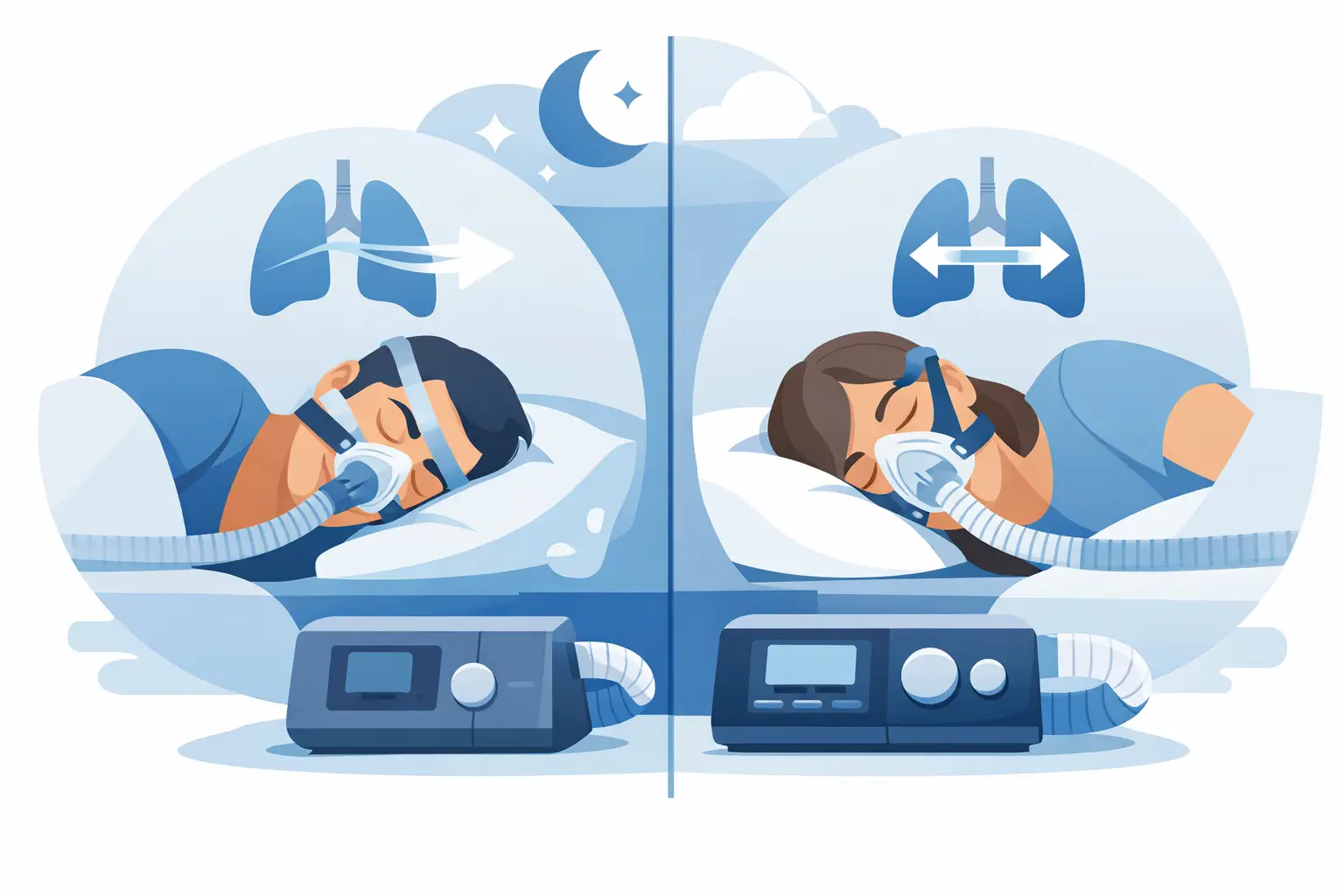
A sleep apnea machine should help you wake up feeling more rested, not leave you wondering why breathing through a mask feels difficult. When comparing CPAP versus BiPAP, the difference comes down to how each device delivers air pressure – and which approach best matches your breathing needs, sleep study results, and comfort.
Both treatments can be highly effective. But they are not interchangeable, and BiPAP is not automatically the “better” or more advanced option. For many people with obstructive sleep apnea, CPAP remains the most effective first treatment. Others may need or tolerate bilevel therapy better, particularly when higher pressures or certain lung and breathing conditions are involved.
CPAP versus BiPAP: the key difference
CPAP stands for continuous positive airway pressure. A CPAP machine delivers one steady level of air pressure while you breathe in and out. That steady pressure acts like an air splint, helping keep the upper airway from collapsing during sleep.
BiPAP stands for bilevel positive airway pressure. It provides two pressure settings: a higher pressure when you inhale and a lower pressure when you exhale. The difference between these settings can make exhaling feel easier for some patients.
For example, someone using CPAP might receive a constant pressure of 10 cm H2O. A person using BiPAP could receive an inhalation pressure of 14 and an exhalation pressure of 8. The specific settings are prescribed based on clinical needs, often after a sleep study or PAP titration study.
The goal of both devices is similar: support healthy breathing during sleep, reduce breathing interruptions, and improve the quality of your rest. The right device is the one that treats your condition effectively while being comfortable enough to use consistently.
When CPAP is usually the first choice
CPAP is commonly prescribed for obstructive sleep apnea, the most common type of sleep apnea. With obstructive sleep apnea, throat muscles relax during sleep and narrow or block the airway. CPAP prevents these repeated blockages by maintaining pressure throughout the night.
Many patients do very well with CPAP, especially when their prescribed pressure is moderate and their mask fits properly. Modern CPAP devices are quieter and more adjustable than older models. Features such as heated humidification, ramp settings, and a range of mask styles can make therapy more comfortable.
Some patients are prescribed auto-adjusting positive airway pressure, often called APAP. Rather than using one fixed pressure all night, APAP adjusts within a clinician-set range in response to changes in breathing. APAP is still a form of single-pressure therapy, not BiPAP.
CPAP or APAP may be a practical starting point when a sleep study confirms uncomplicated obstructive sleep apnea. It is generally effective, widely available, and often covered by insurance when medically indicated. The most important factor is regular use. Even the right prescription cannot help if discomfort causes you to remove the mask after a few hours.
When BiPAP may be recommended
A sleep or pulmonary specialist may recommend BiPAP when a patient needs higher airway pressure and has trouble breathing out against continuous pressure. The lower exhalation setting can make treatment feel more natural and reduce the sensation of pushing air out against the machine.
BiPAP may also be considered for people with certain more complex respiratory needs. These can include sleep-related hypoventilation, some forms of central sleep apnea, neuromuscular conditions that weaken breathing muscles, or chronic respiratory failure related to conditions such as COPD. In these situations, a clinician may use bilevel therapy or another specialized noninvasive ventilation mode to support ventilation more directly.
That distinction matters. A BiPAP prescription for uncomplicated obstructive sleep apnea is not the same as a bilevel device prescribed to help someone with chronic carbon dioxide retention or weakened respiratory muscles. The settings, follow-up needs, and clinical monitoring may be very different.
BiPAP can also be useful when CPAP has been tried appropriately but remains poorly tolerated. Still, discomfort alone does not always mean a person needs a different machine. A mask leak, nasal congestion, dry mouth, pressure ramp setting, or humidifier adjustment may solve the problem without changing the type of therapy.
Is BiPAP more comfortable than CPAP?
For some people, yes. The lower pressure during exhalation can make BiPAP feel easier to breathe with, particularly at higher treatment pressures. Patients who feel they are “fighting” their CPAP machine may benefit from a clinical review to determine whether bilevel therapy is appropriate.
However, comfort is personal. Some people prefer the steady, predictable feel of CPAP. Others may find two pressure levels take time to get used to. Mask fit often has as much impact on comfort as the machine itself. A full-face mask may be helpful for a person who breathes through their mouth at night, while nasal masks or nasal pillows may feel less bulky for others.
Before deciding that a machine is not working, look at the full picture: how long you use it, whether the mask leaks, whether you wake with dry mouth, and whether your daytime symptoms are improving. Device data can also help a clinician see whether events are controlled and whether pressure changes are needed.
What a sleep specialist considers before prescribing treatment
Choosing between CPAP and BiPAP requires more than comparing features. Your clinician will consider the type and severity of sleep apnea, your oxygen levels, your pressure needs, your medical history, and whether another breathing condition is present.
A sleep study may show obstructive events, central events, low oxygen during sleep, or signs that breathing is too shallow. Your history matters, too. COPD, heart disease, obesity hypoventilation syndrome, use of certain medications, and neuromuscular conditions can affect treatment decisions.
Your response to therapy is equally important. If you are using CPAP consistently and still feel exhausted, wake up gasping, or have persistent high event readings on the device, do not simply increase settings on your own. A clinician should review the data and determine whether the issue is pressure, mask leak, another sleep disorder, or a need for a different treatment approach.
Getting the most from PAP therapy at home
The first few weeks of PAP therapy are an adjustment period. Small practical changes can make a meaningful difference. Use the machine every time you sleep, including naps, so your body can adapt. Put the mask on while awake for a few minutes if it feels unfamiliar, and make sure the headgear is secure without being overly tight.
Keep the equipment clean according to the manufacturer’s instructions, replace worn supplies as recommended, and speak up early if you have problems. Nasal dryness, skin irritation, congestion, air swallowing, and mask leaks are common concerns with solutions available in many cases.
Remote care can make follow-up easier when you need guidance without the burden of travel. Through a secure video consultation, a board-certified pulmonary or sleep specialist can review symptoms, discuss sleep testing, coordinate prescriptions, and help determine the next step for your respiratory health. Interstate Pulmonary also helps patients navigate equipment needs as part of an individualized care plan.
A treatment decision should fit your breathing and your life
CPAP is often the reliable first-line treatment for obstructive sleep apnea. BiPAP can be a valuable option for patients who need different pressure support, cannot tolerate high continuous pressure, or have more complex breathing conditions. Neither machine is a one-size-fits-all answer.
If nightly therapy feels harder than it should, or you are not seeing the improvement you expected, that is a reason for a conversation with a sleep specialist – not a reason to give up. With the right evaluation, settings, and support, PAP therapy can become a manageable part of protecting your sleep, breathing, and daily well-being.