
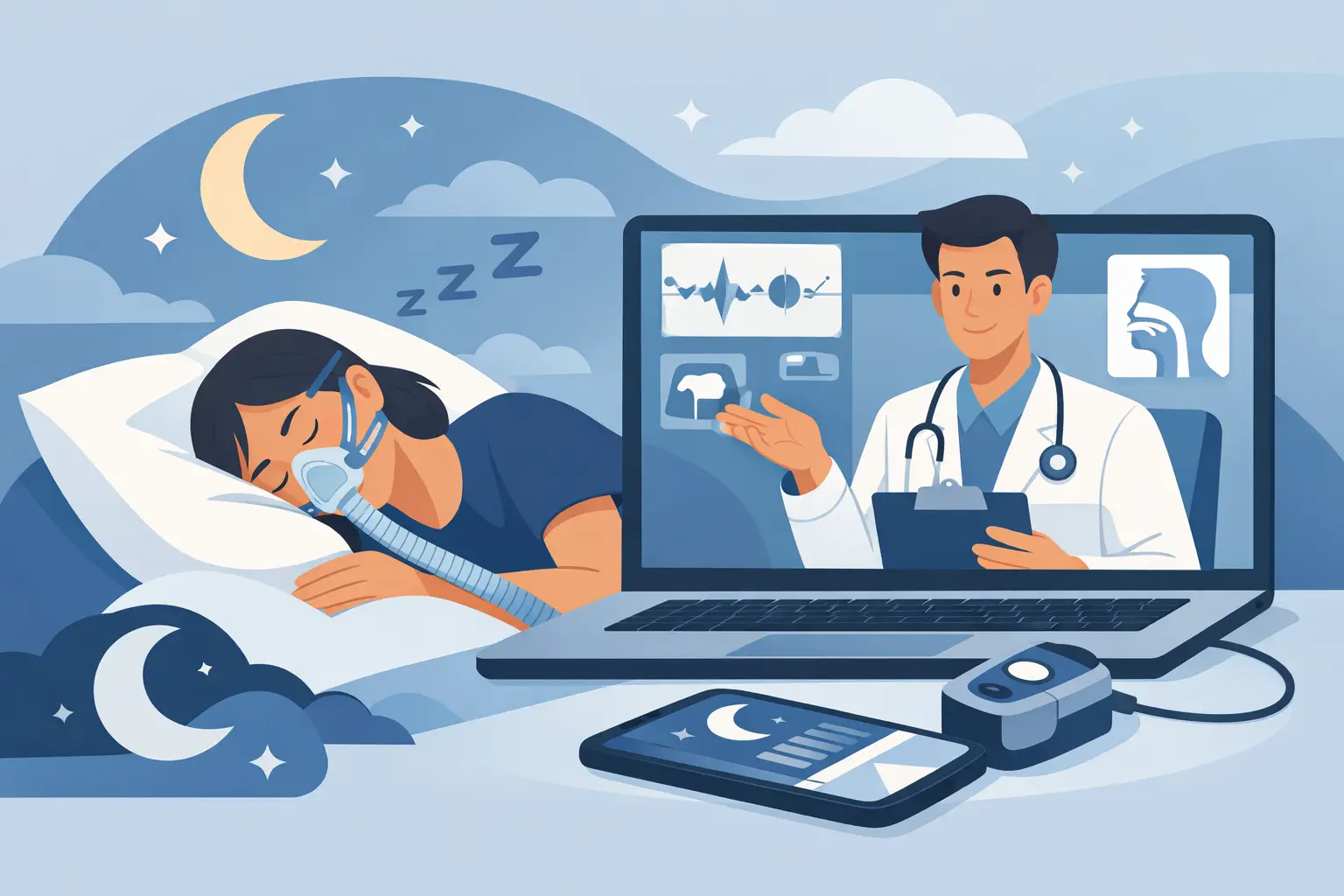
Waking up tired after a full night in bed can feel frustrating, especially when loud snoring, gasping, morning headaches, or daytime sleepiness are becoming part of your routine. A sleep apnea evaluation online gives you a practical way to discuss these concerns with a qualified clinician without adding a long drive or crowded waiting room to an already exhausting day.
Sleep apnea is more than occasional snoring. It is a condition in which breathing repeatedly stops or becomes too shallow during sleep. Those interruptions can reduce sleep quality and may affect your energy, concentration, mood, and long-term health. An online evaluation can help you understand whether your symptoms point toward sleep apnea, what testing may be appropriate, and what the next steps could look like.
What happens during an online sleep apnea evaluation?
An online evaluation begins with your health history and sleep concerns. Before your appointment, you may complete an intake questionnaire about symptoms, medications, medical conditions, sleep habits, and prior testing. This information helps your clinician use appointment time efficiently and understand the full picture.
During a secure video consultation, a sleep or pulmonary specialist may ask about snoring, pauses in breathing noticed by a bed partner, choking or gasping at night, frequent awakenings, and how rested you feel in the morning. They may also ask about daytime drowsiness, difficulty concentrating, high blood pressure, weight changes, nasal congestion, alcohol use, and family history.
The conversation is individualized. For example, someone with persistent snoring and daytime fatigue may need a different assessment than someone with COPD, heart disease, insomnia, or a previous sleep apnea diagnosis. Your clinician will review the symptoms that matter in your case, explain whether sleep apnea is a concern, and recommend an appropriate path forward.
A virtual appointment does not mean less thorough care. It means much of the information needed to begin a sleep evaluation can be gathered through a careful history, review of records, and clinical discussion from the comfort of home. If you need diagnostic testing, your clinician can coordinate the next step.
When an online evaluation may be a good fit
Many people delay getting help because their symptoms seem easy to dismiss. They may assume snoring is normal, blame fatigue on work, or wait until a partner complains about disrupted sleep. A sleep apnea evaluation is worth considering when these signs are frequent, persistent, or affecting daily life.
Common reasons to schedule include loud habitual snoring, witnessed pauses in breathing, waking up gasping, dry mouth or headaches in the morning, unrefreshing sleep, and sleepiness while reading, watching television, or driving. Some people also seek evaluation after learning they have resistant high blood pressure, an irregular heartbeat, or another health condition that can be associated with sleep-disordered breathing.
Online specialty care can be especially helpful if travel is difficult, appointments are hard to fit around work or caregiving, or you live far from a sleep clinic. For patients who need ongoing respiratory care, virtual visits can also make it easier to keep prescriptions, equipment questions, and follow-up care connected.
Testing options after your consultation
An evaluation is not the same as a diagnosis. Sleep apnea is generally confirmed with a sleep study, and the right test depends on your symptoms and medical history.
Home sleep apnea testing
For some adults with a strong likelihood of uncomplicated obstructive sleep apnea, a clinician may recommend a home sleep apnea test. You use a small device at home overnight, following the instructions provided. The device typically records breathing patterns, oxygen levels, airflow, and other information that can help identify breathing interruptions during sleep.
Home testing is convenient and may reduce the burden of spending a night away from home. Still, it is not the best choice for everyone. It may be less appropriate when symptoms suggest another sleep disorder or when someone has certain complex medical conditions. A negative or unclear home test does not always rule out sleep apnea, particularly if symptoms remain convincing.
In-lab sleep testing
An overnight sleep study in a sleep center can provide a more detailed look at sleep stages, breathing, movement, heart rhythm, and other factors. Your clinician may recommend this option if your health history is more complex, if a home test is inconclusive, or if there are concerns beyond straightforward obstructive sleep apnea.
The key is not choosing the most convenient test on your own. It is choosing the test that is most likely to provide an accurate answer for your situation. Your specialist can explain the trade-offs clearly and help you avoid unnecessary delays.
What a clinician looks for
The most common type of sleep apnea is obstructive sleep apnea, which occurs when the upper airway narrows or closes during sleep. Risk can be influenced by anatomy, weight, age, nasal obstruction, alcohol or sedative use, and family history. However, sleep apnea can affect people of different body types, ages, and lifestyles. You do not need to fit a stereotype to deserve an evaluation.
A clinician will also consider whether symptoms could have another explanation. Insomnia, restless legs symptoms, medication effects, depression, thyroid conditions, chronic lung disease, and other concerns can contribute to poor sleep or daytime fatigue. That broader clinical view is one reason a specialist consultation matters.
If sleep apnea is diagnosed, the severity of breathing interruptions and your individual health needs will guide treatment recommendations. Treatment is not one-size-fits-all, and a plan should be based on both test results and what you can realistically use consistently.
If you are diagnosed, care can continue from home
For many patients, positive airway pressure therapy, often called CPAP, is a first-line treatment for obstructive sleep apnea. The device uses gentle air pressure to help keep the airway open while you sleep. Modern devices and masks come in different styles, and finding a comfortable fit can make a meaningful difference in long-term success.
Depending on your diagnosis, treatment may also involve weight management support, positional changes during sleep, oral appliance referral, management of nasal symptoms, or discussion of other options. Some people need adjustments after starting therapy. Dryness, mask leaks, discomfort, or trouble tolerating pressure are common challenges that should be addressed rather than ignored.
Telemedicine follow-up can make those adjustments easier. You can discuss how you are sleeping, review equipment concerns, and receive guidance without repeatedly taking time off work or traveling to an office. At Interstate Pulmonary, board-certified clinicians can provide individualized virtual pulmonary and sleep care, including treatment guidance, electronic prescriptions when appropriate, and support obtaining needed equipment.
How to prepare for your video appointment
You do not need to arrive with every answer, but a little preparation can make your consultation more useful. Think about when your symptoms began, whether someone has observed breathing pauses or loud snoring, and how sleepiness affects your day. If you have a smartwatch or phone app that records sleep data, it can be useful context, but it does not replace a medical sleep study.
Have a current medication list available, along with information about past sleep studies, CPAP use, major medical conditions, and recent test results if you have them. If a partner shares your bed, their observations can be valuable because people often do not notice their own breathing interruptions.
Also choose a quiet, private space with a reliable internet connection. A secure video visit is still a medical appointment, so being able to speak openly about your symptoms helps your clinician give more personalized recommendations.
Questions patients often ask
Can sleep apnea really be evaluated by video?
Yes. A clinician can perform the initial medical assessment by video, review symptoms and records, determine your risk, and order or coordinate appropriate testing when indicated. The sleep study itself may be completed at home or in a sleep center, depending on your needs.
Will insurance cover an online appointment or sleep test?
Coverage depends on your insurance plan, your location, the clinician, and the type of test recommended. Before scheduling, ask about insurance compatibility, expected out-of-pocket costs, and any referral or authorization requirements. Clear answers early can help you plan with confidence.
What if I already have CPAP but am still tired?
Persistent fatigue can have several causes, including mask leaks, inadequate pressure settings, inconsistent use, insufficient sleep, or another medical or sleep condition. A follow-up evaluation can help identify what is getting in the way instead of leaving you to troubleshoot alone.
Is snoring always sleep apnea?
No. Snoring can occur without sleep apnea, and not everyone with sleep apnea snores loudly. The concern rises when snoring comes with witnessed breathing pauses, gasping, daytime sleepiness, or health issues that may be affected by poor sleep.
If you have severe shortness of breath, chest pain, fainting, or immediate safety concerns related to extreme drowsiness while driving, seek urgent medical care rather than waiting for a routine sleep appointment.
A better night of sleep often begins with one clear conversation. If your symptoms are making daily life harder, an online evaluation can give you a clinically guided next step and a practical way to start caring for your breathing from home.